Andersen EV Charger Installation with Load Management, Chippenham
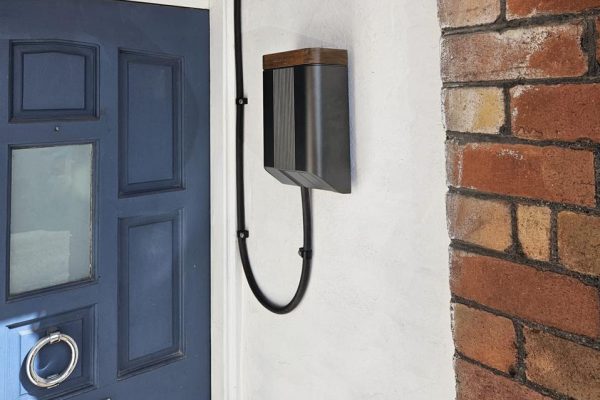
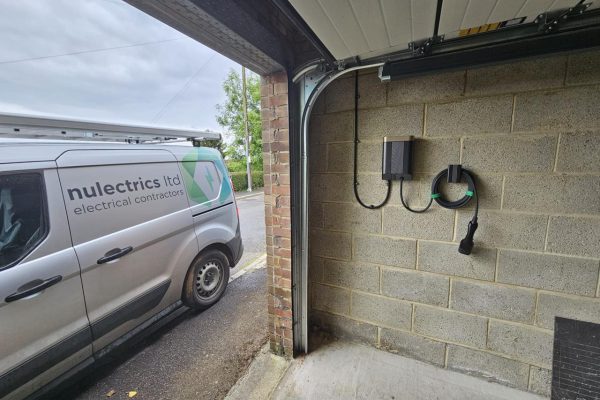
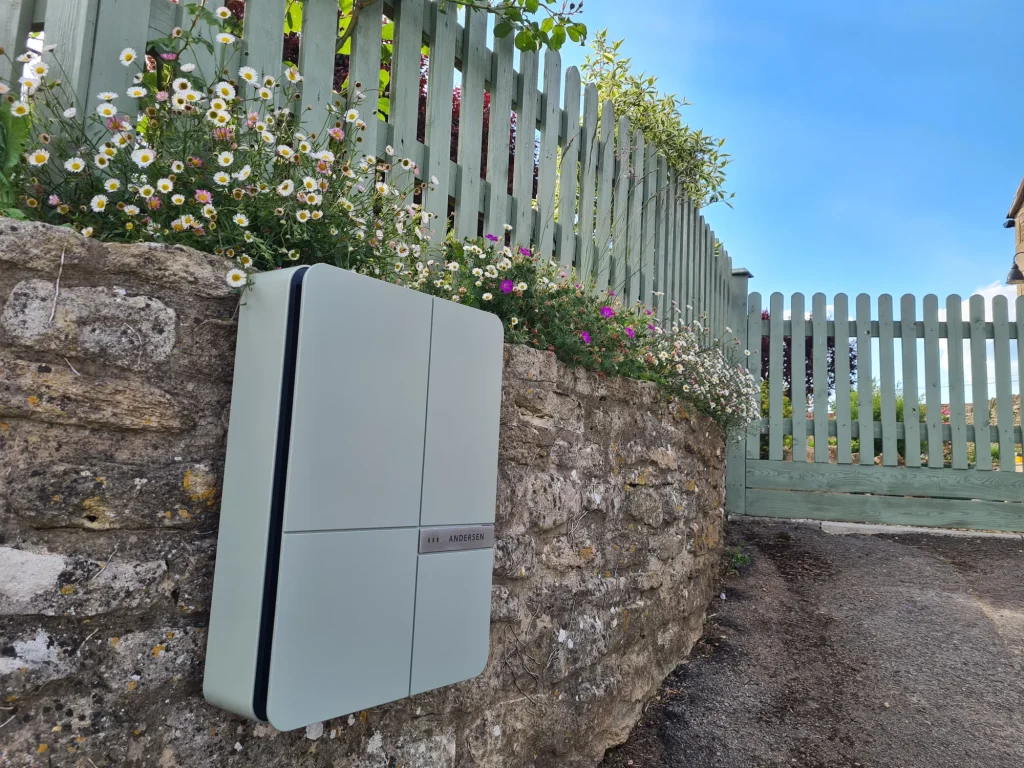
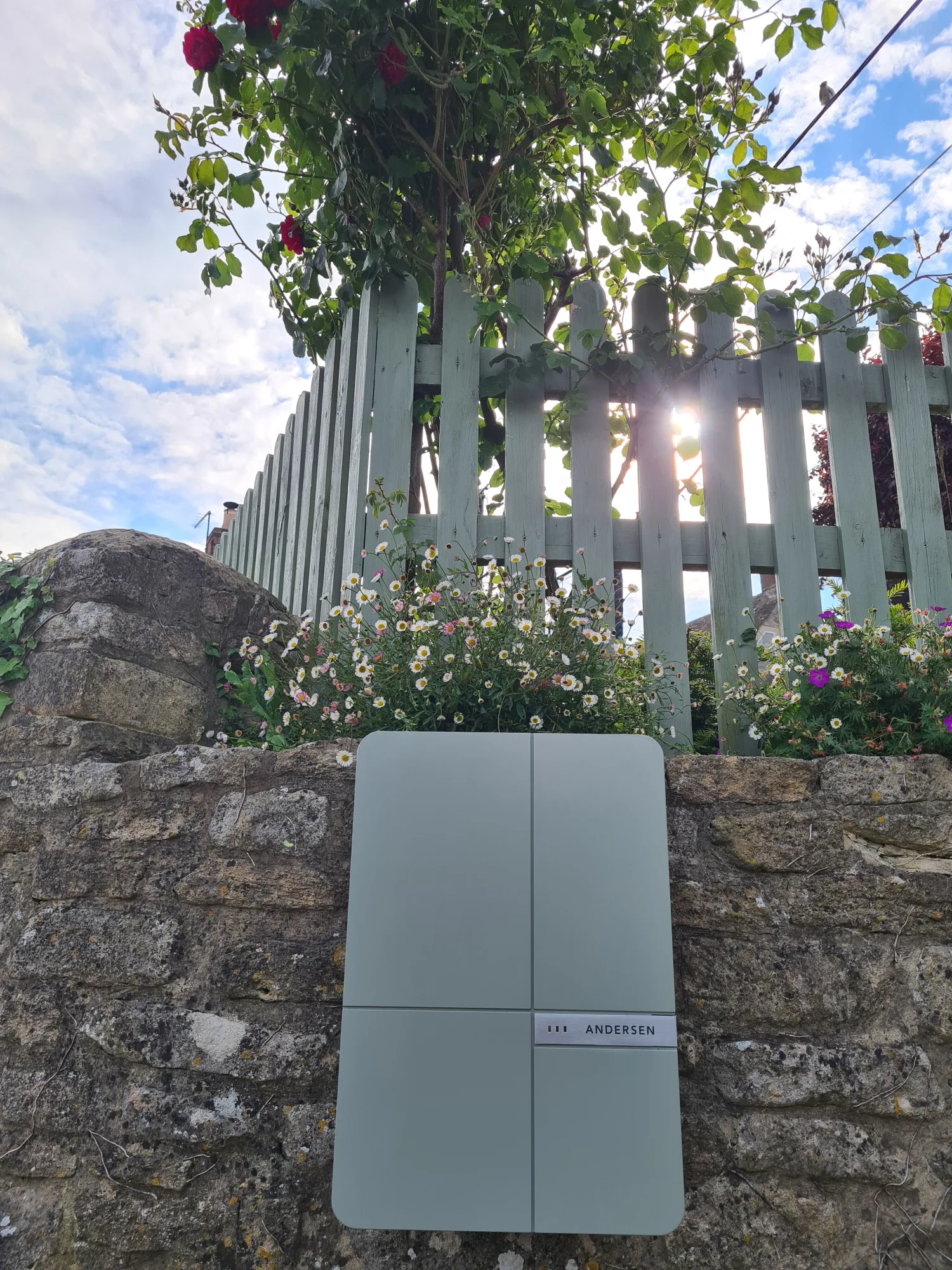
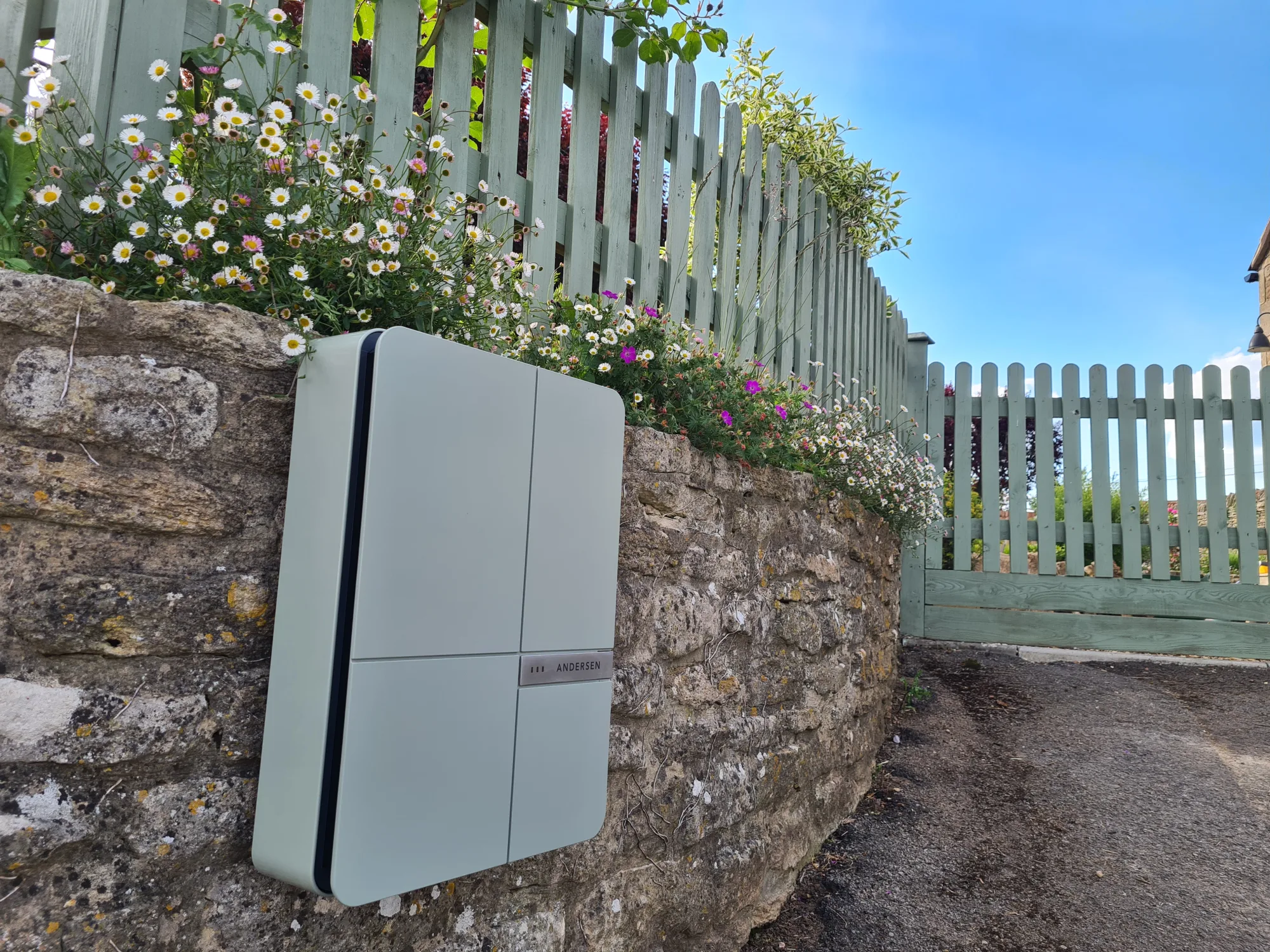
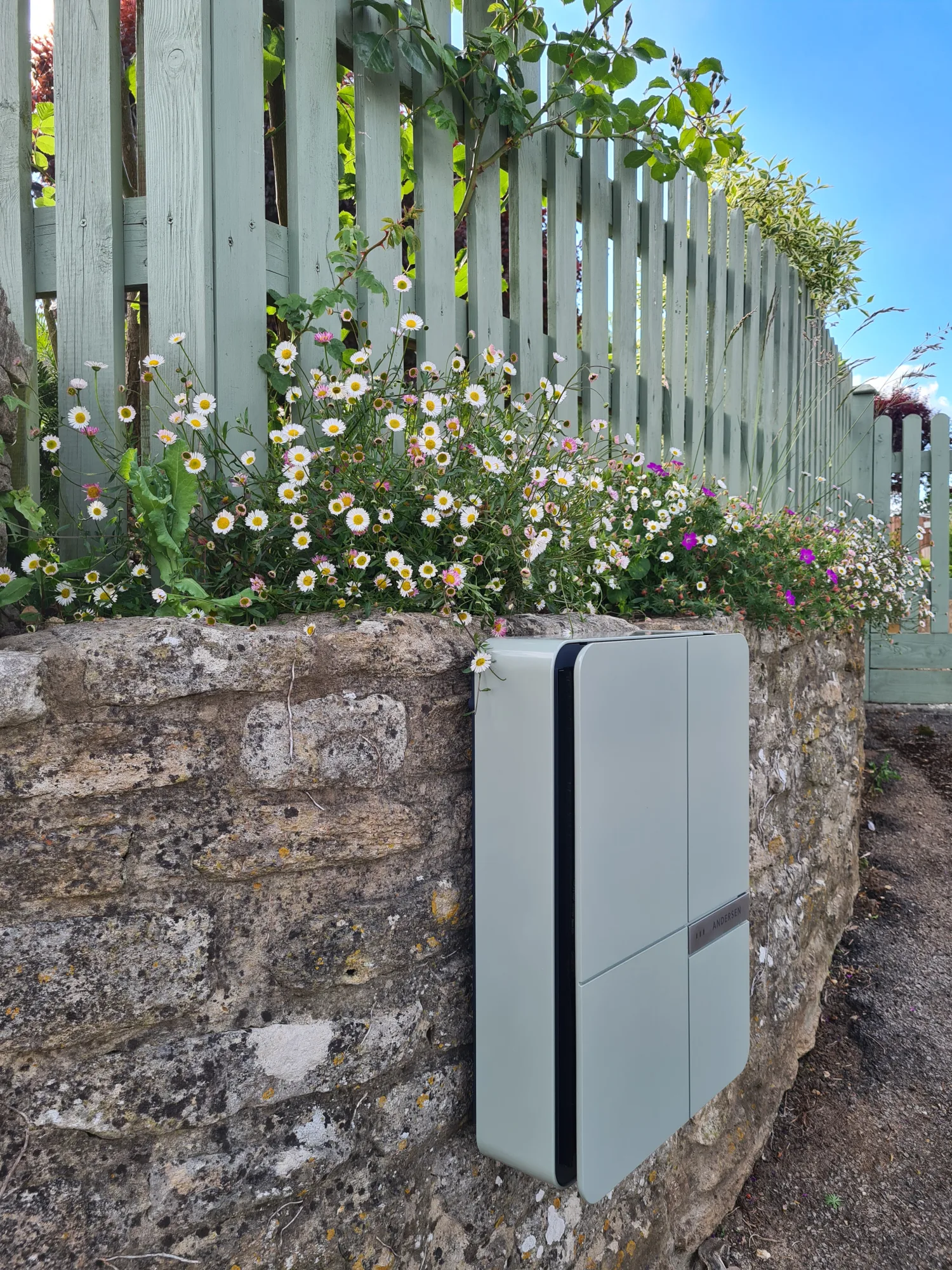
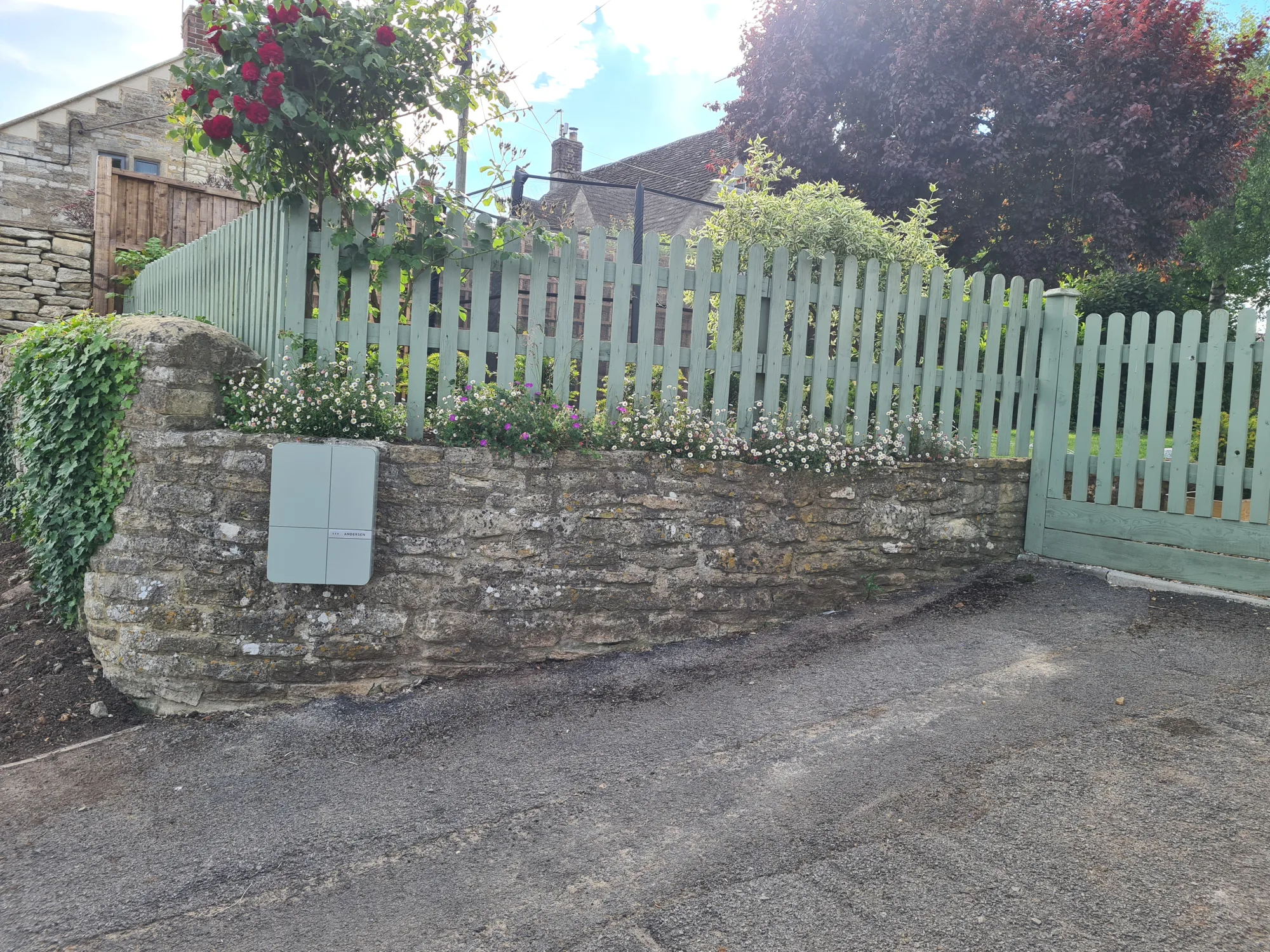
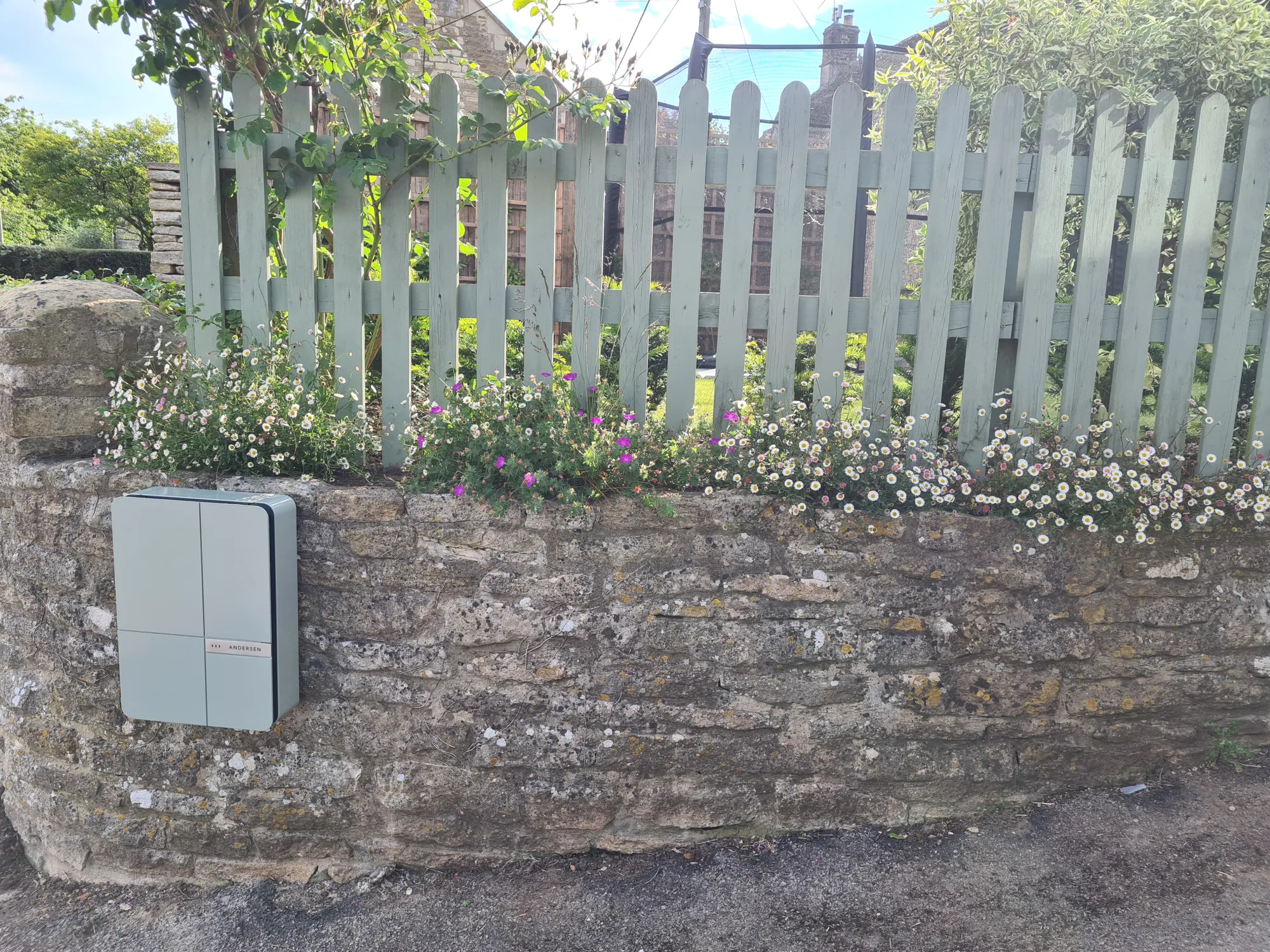
Nulectrics installed an Andersen EV charge point at a private home in Chippenham. The charger sits on the Cotswold stone boundary wall at the edge of the drive, a long way from the consumer unit, so the supply had to be dug in and ducted from the house and across the garden. Load management was included so the charger works within the existing incoming supply.
Products & Materials Used
- Andersen EV charge point, tethered, with the lead stowed inside the body
- Armoured cable Buried supply with an incorporated data cable for load management
- Ducting Underground ducting from the house across the garden to the wall
The Challenge: Getting a Supply Across the Garden to a Boundary Wall
The customer wanted the charge point on the stone boundary wall by the drive rather than on the house. That put it a long way from the consumer unit with no existing route between the two, so nothing could be clipped or surface run. The cable had to leave the house, cross the garden and come up inside the wall. Load management added a second requirement: the charger needed a data connection back to the incoming supply, not just power.
The Solution: A Ducted Armoured Run with Load Management
Digging and Ducting the Route
We set the route out from the house, through the garden and into the base of the boundary wall, then dug it in and laid underground ducting along the whole length. Ducting protects the cable where it passes under the garden, and it means the run can be drawn out and replaced later without opening the ground up a second time.
Armoured Cable with an Incorporated Data Core
The supply is armoured cable with a data cable incorporated into it. That data core is what makes load management work. The charger can see what the rest of the house is drawing and turn its own output down when the property is under load, so the main fuse stays within its rating instead of the charger simply adding to everything else. Running one cable carrying both meant a single trench and a single duct rather than two.
Mounting the Charger and Terminating
The unit was mounted on the face of the stone wall with the cable brought up behind it, so nothing is visible on the approach to the house. It is a tethered charger, so the lead lives inside the body of the unit and stows away when it is not in use.
The Result: A Tethered Charger That Puts Itself Away
The customer charges from the wall beside the drive, with the cable stowed inside the charger between uses rather than coiled on the ground or left hanging. Load management means the installation works with the supply that was already there. The whole run is underground and ducted, so the garden went back as it was.
See our EV charger installation, our domestic electrical services, or read our guide to EV charger grants.
Gallery
Frequently asked questions
What is load management on an EV charger?
Load management lets the charge point see how much current the rest of the property is drawing and reduce its own output when demand is high. It means a charger can often be installed without upgrading the incoming supply, because the total load is held below the main fuse rating rather than the charger adding to whatever else is running.
Can an EV charger be fitted away from the house?
Yes. The charge point does not have to go on the house wall. What governs it is the cable route and the volt drop over the length of the run. On this job the charger went on a boundary wall at the edge of the drive, with the supply dug in and ducted across the garden to reach it.
What is the difference between a tethered and an untethered charger?
A tethered charger has its lead permanently attached, so you unhook it and plug straight into the car. An untethered unit has a socket and you supply your own cable. Tethered is quicker day to day, and on this unit the lead stows inside the body, which keeps it off the ground and out of the weather.
Does a buried cable to an EV charger need to be armoured?
A buried run does. Steel wire armoured cable protects the conductors from being crushed or struck, which is why it is the normal choice for a supply crossing a garden. It should be laid at a suitable depth and ducted or otherwise protected, so that anyone digging later has some warning.
How long does an EV charger installation take?
A straightforward installation on a house wall close to the consumer unit is usually a day. This one took a day and a half, because the route had to be excavated and ducted from the house, across the garden and up into a stone wall before the charger could go on.