Simpson & Partners 7 kW EV Charger with Consumer Unit Replacement
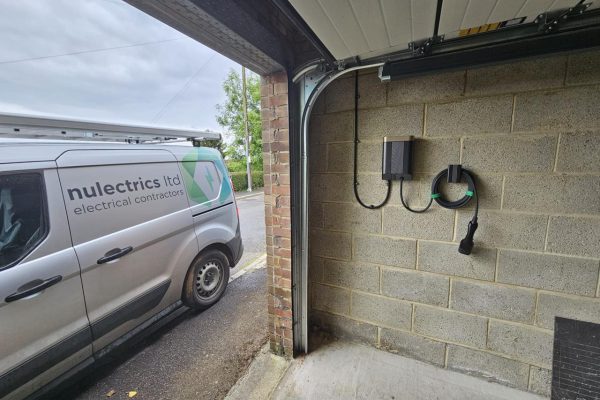
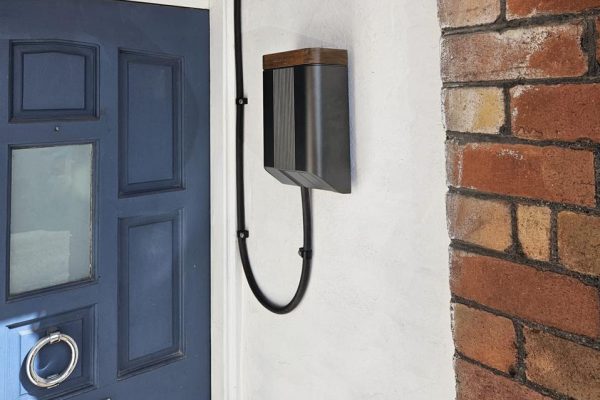
Nulectrics installed a Simpson & Partners 7 kW+ untethered EV charger at a domestic property, alongside a full consumer unit replacement to bring the installation up to modern regulations. The finished setup gives the customer safe, full-speed home charging on a compliant board, with individual RCBO protection on every circuit.
Products & Materials Used
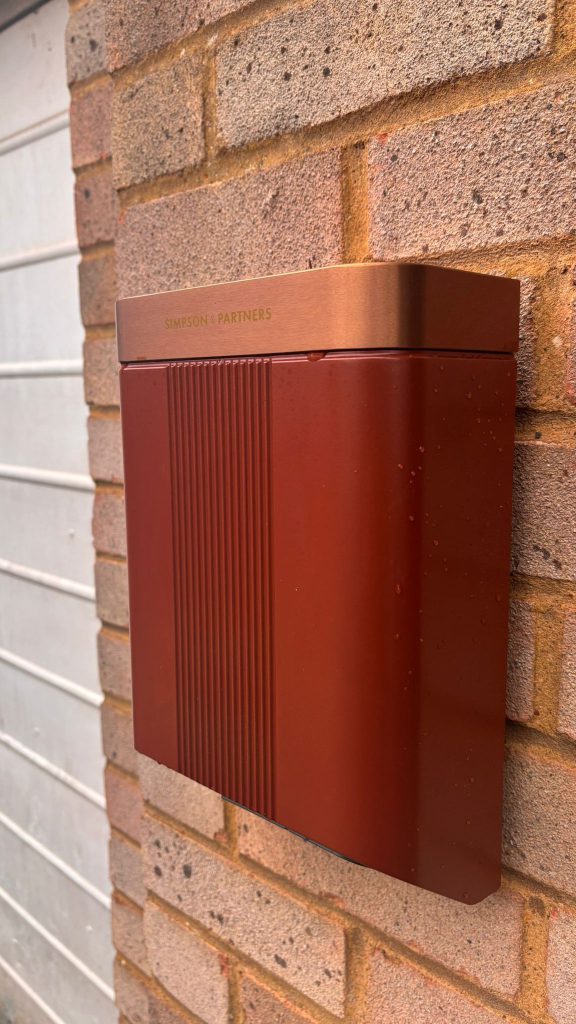
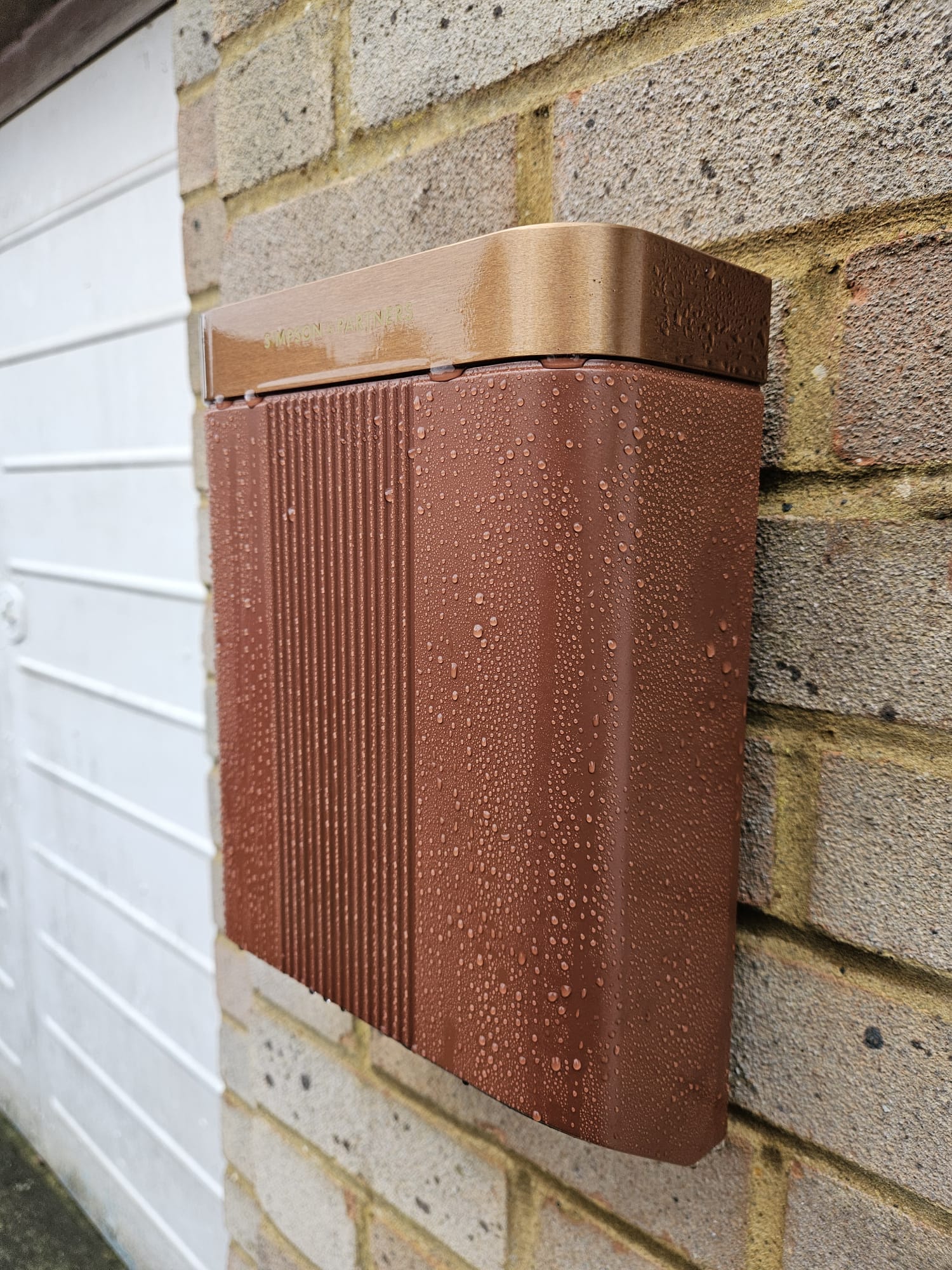
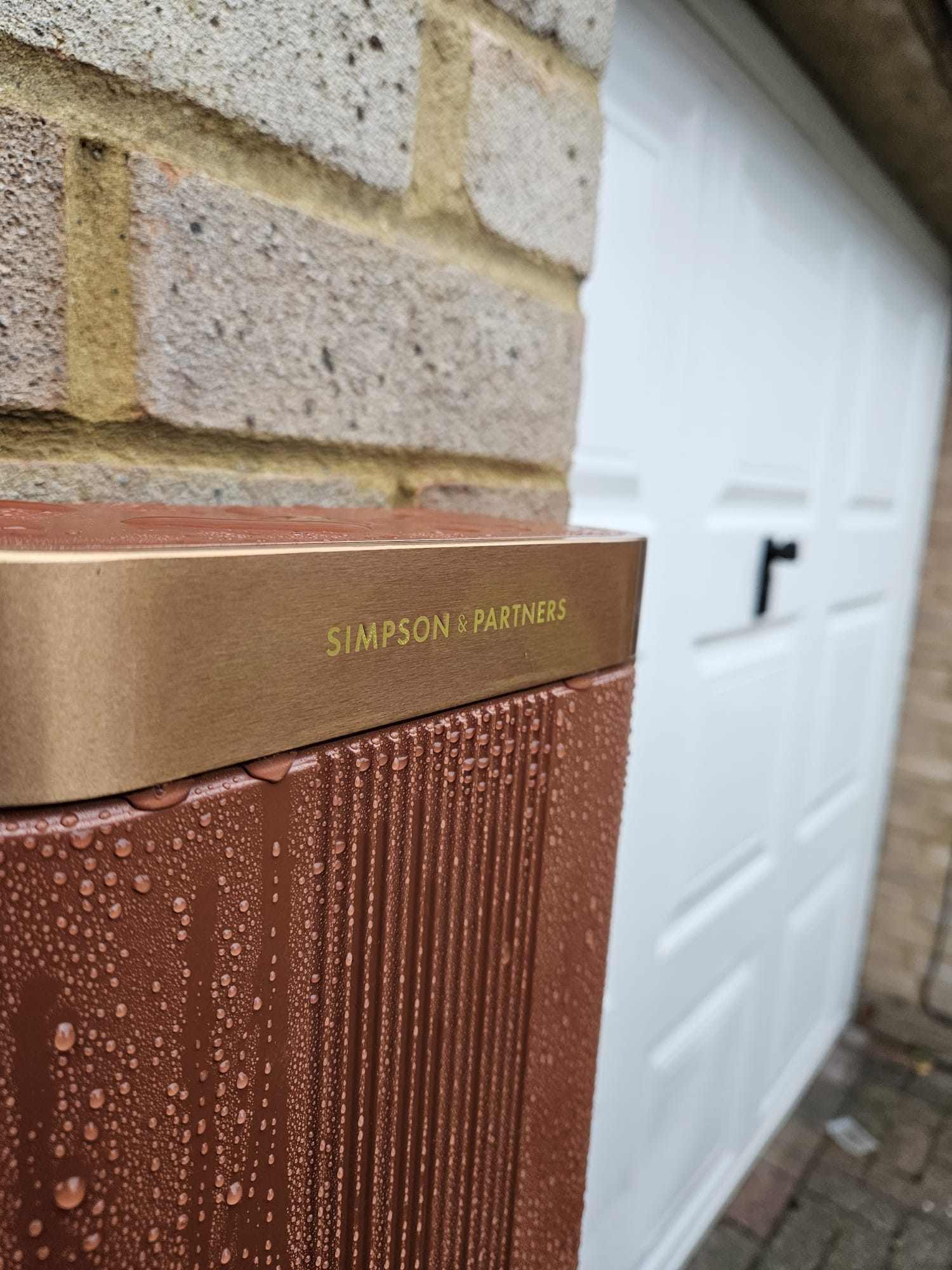
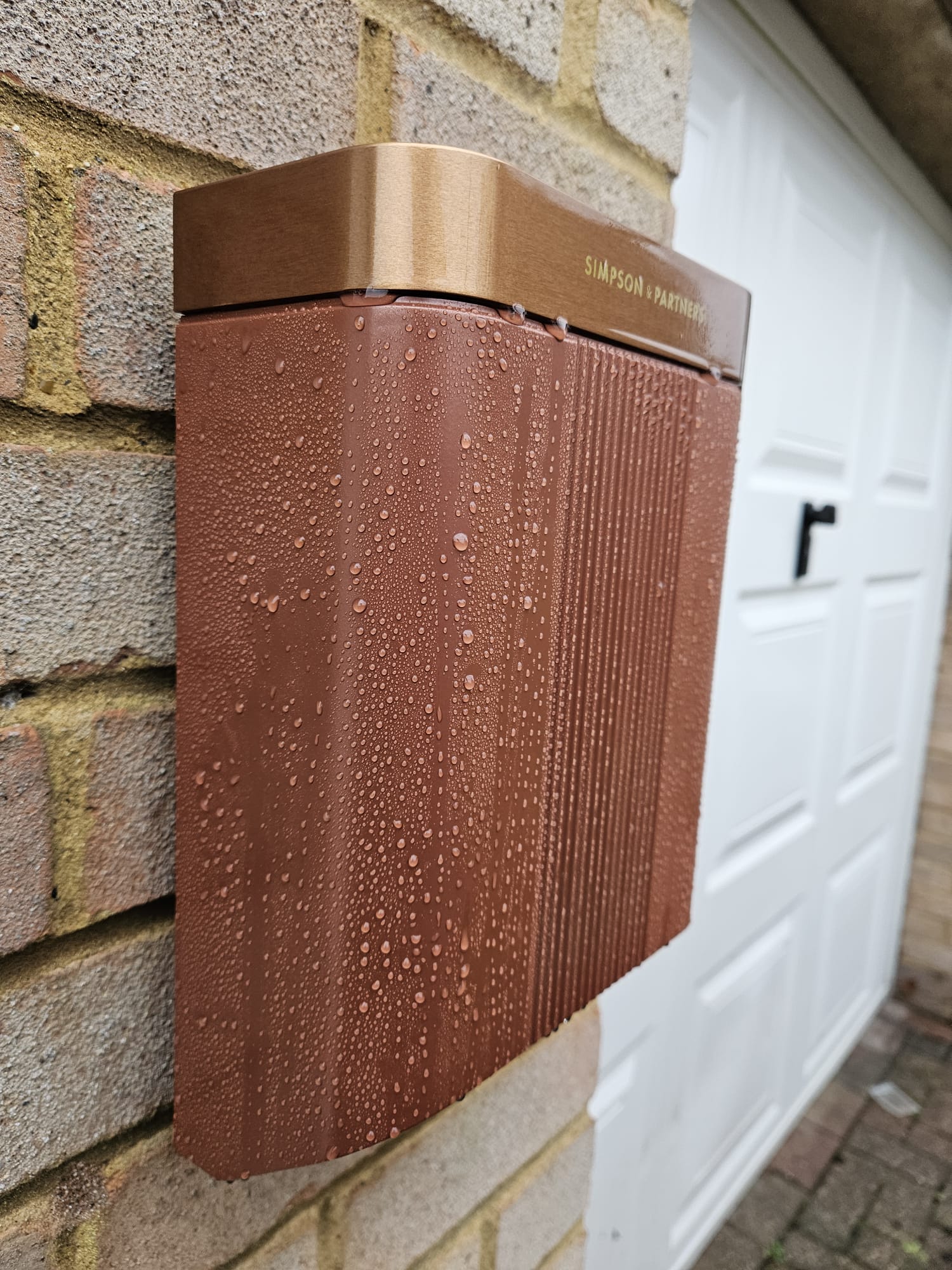
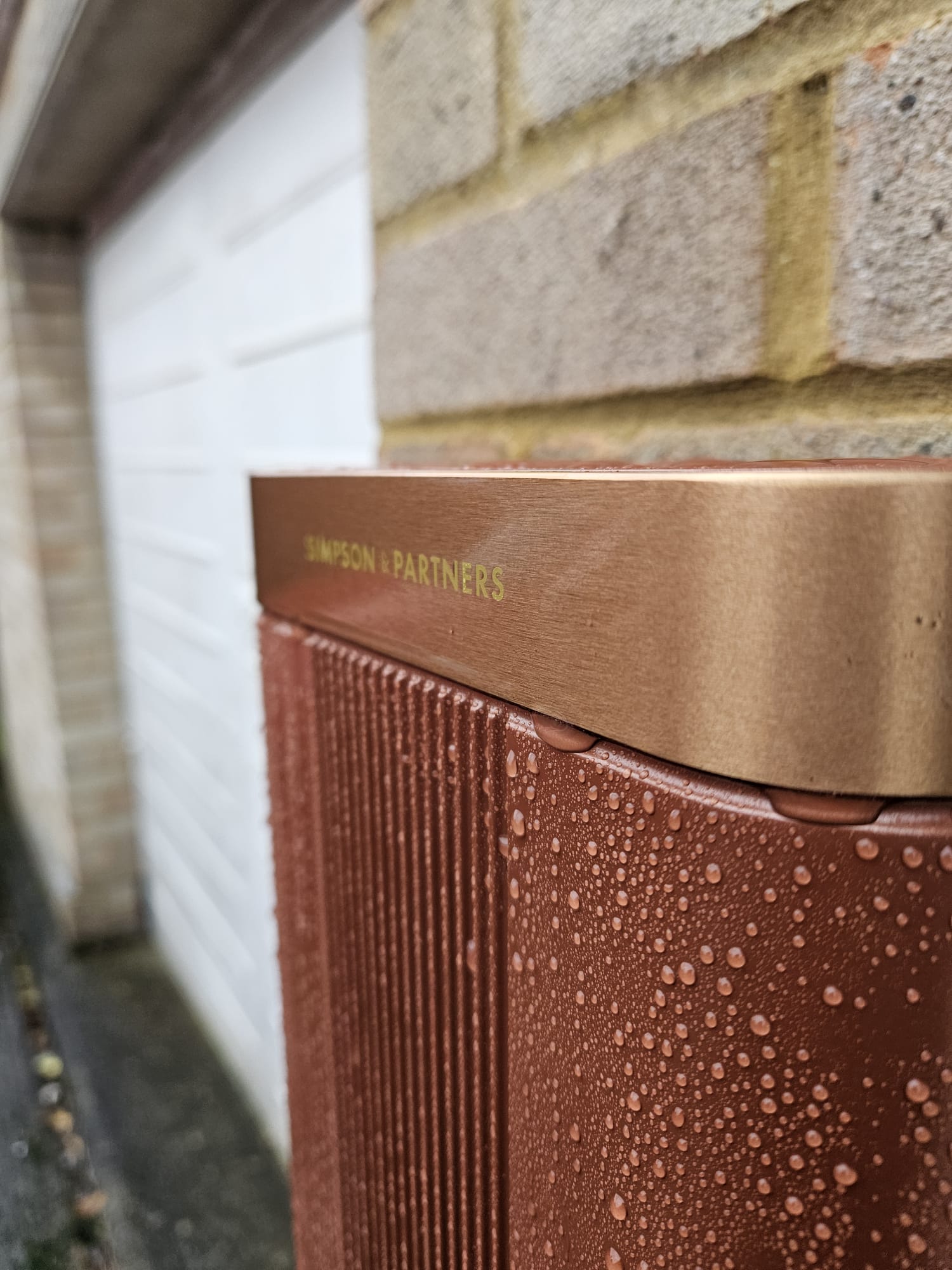
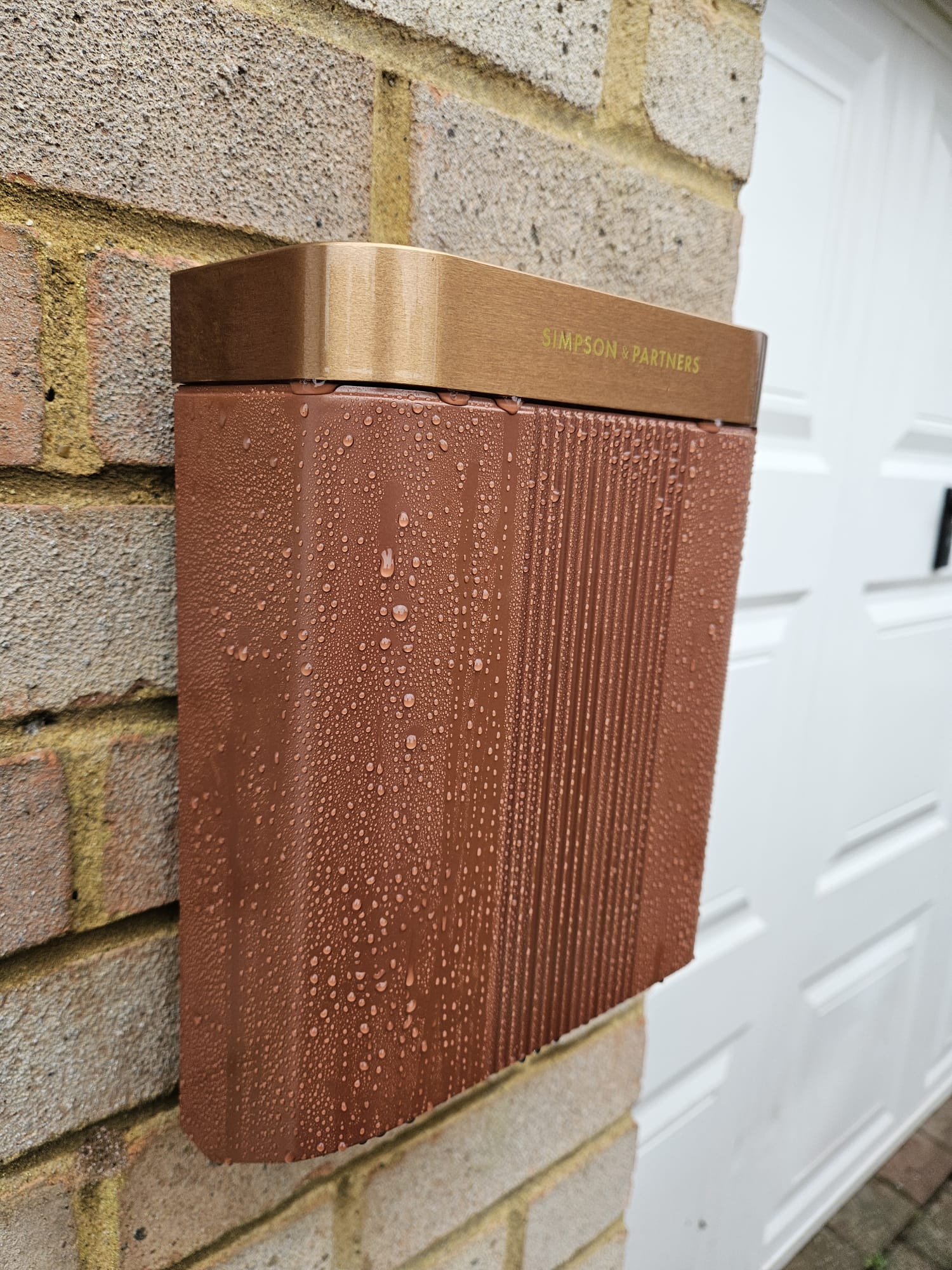
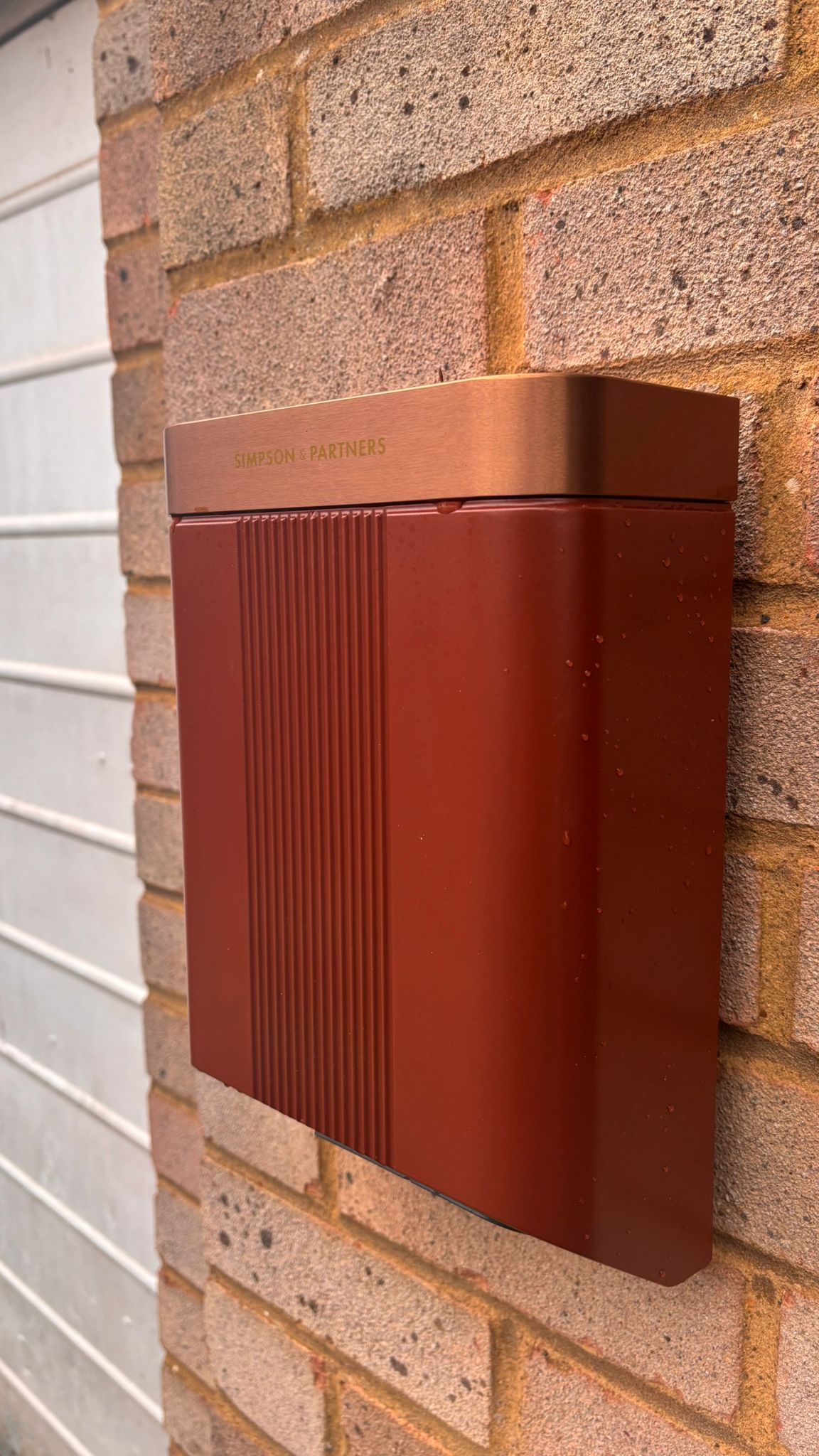
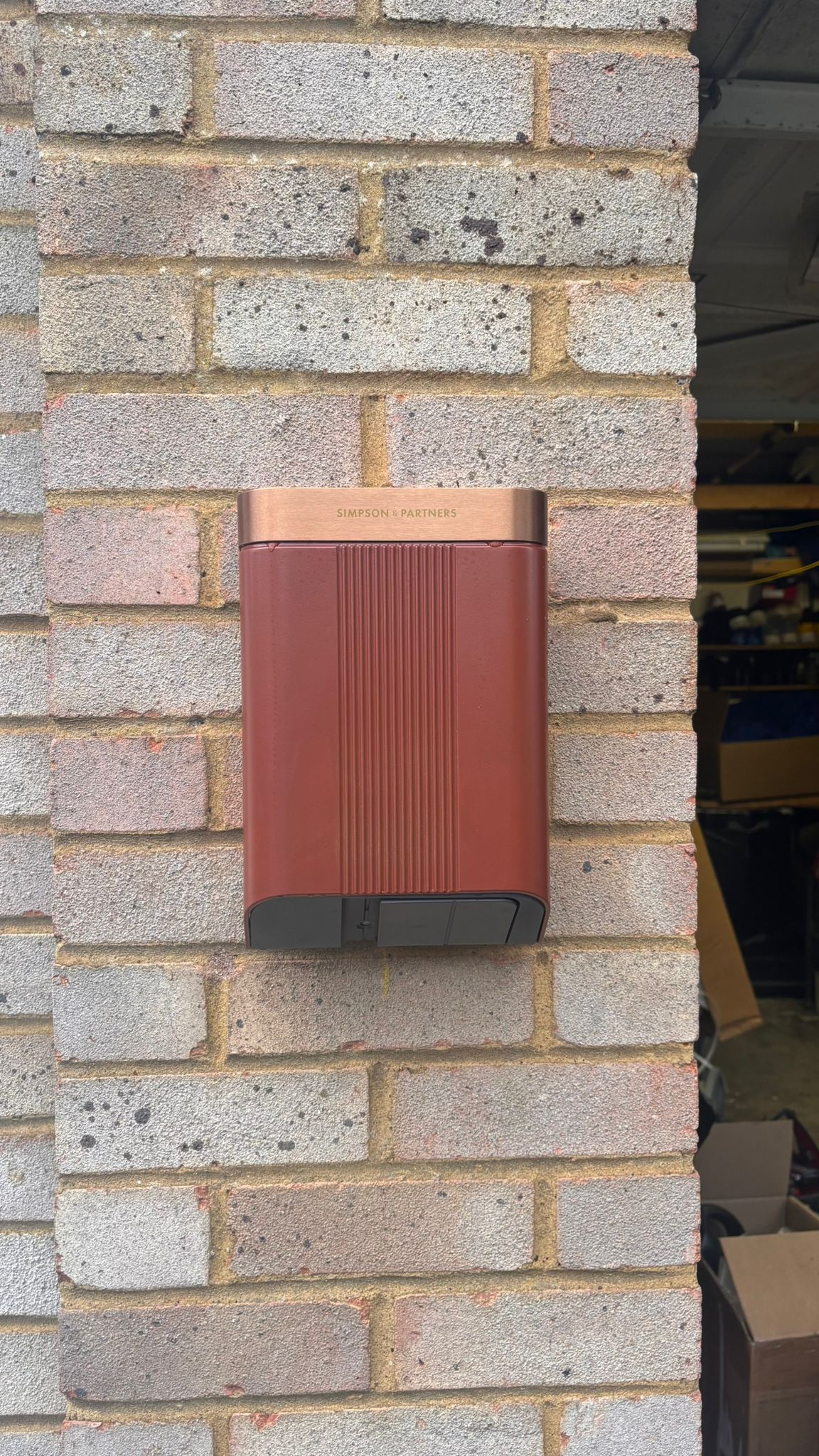
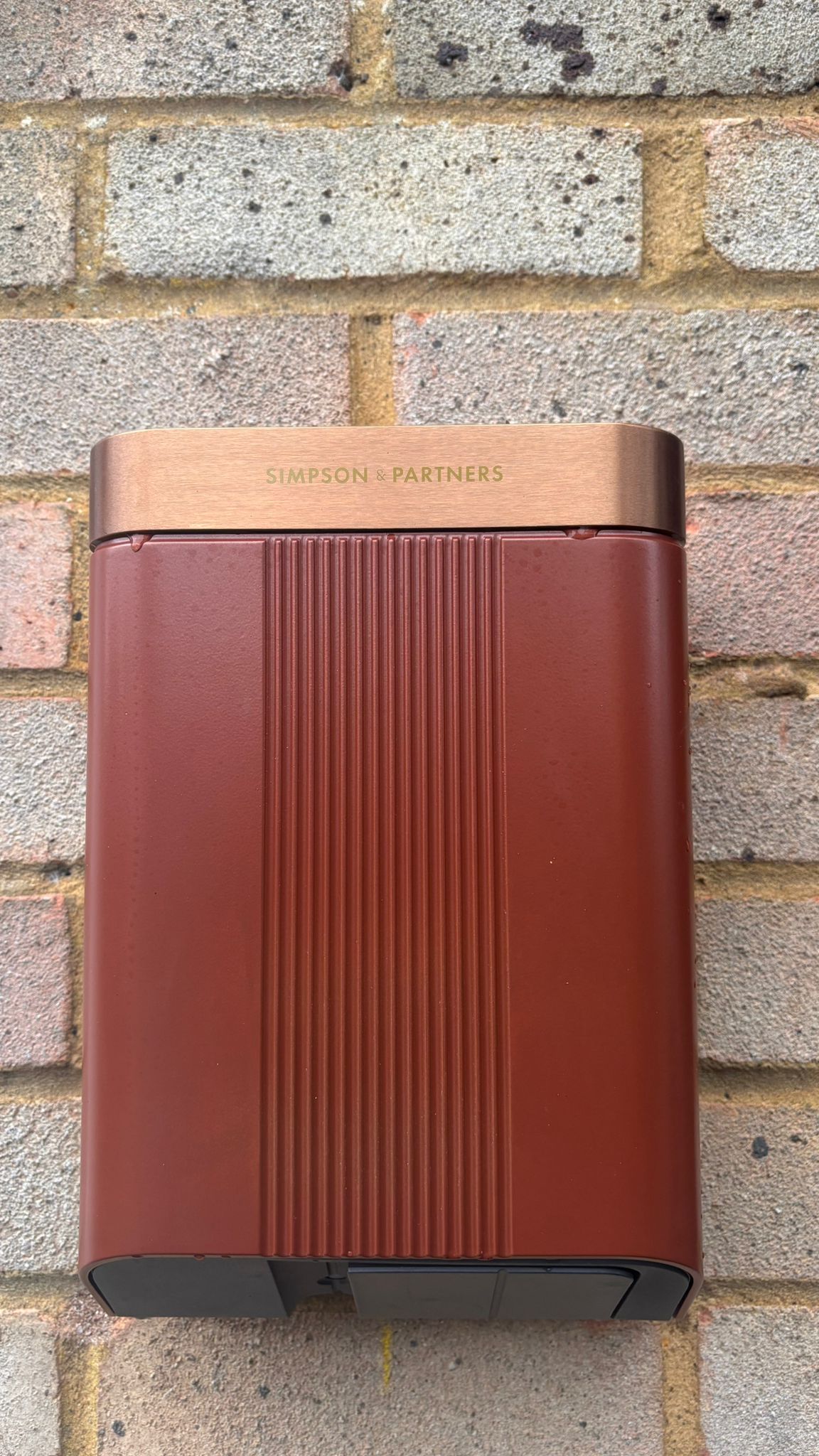
- Simpson & Partners 7 kW+ untethered EV charger, brick finish with dark copper top
- Simpson & Partners Wired energy manager with CT clamp
- Consumer unit New board with SPD and RCBO per circuit
The Challenge: An Out of Date Consumer Unit Blocking the Charger Install
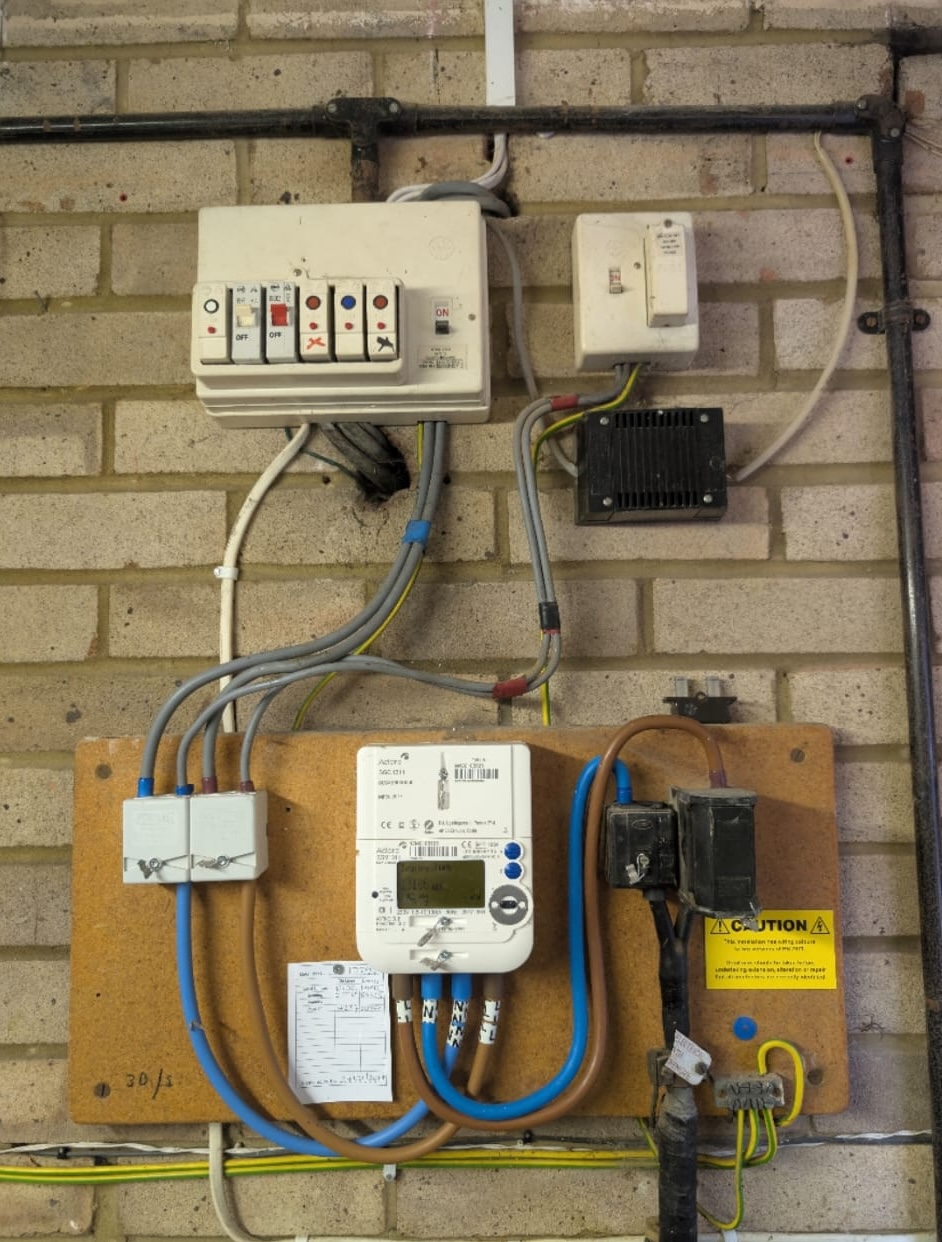
An Out of Date Consumer Unit
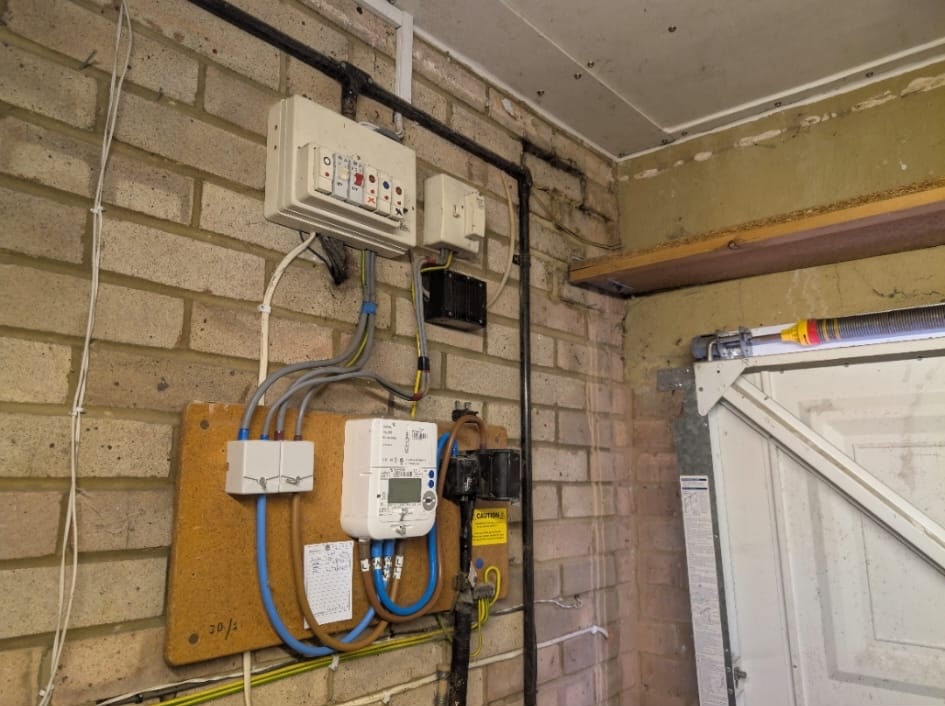
The existing consumer unit was out of date and would not support the new EV charger installation. We gave the customer two options: leave the existing board alone and put in a small secondary board just for the charger (with SPD and double-pole Type A RCD), or replace the whole unit properly.
Why a Full Consumer Unit Change Needs an EICR
To replace the whole unit we need a valid EICR. The customer did not have one and had never had one done. Without an electrical inspection on an installation that has not been maintained or checked before, changing the board means fitting sensitive new equipment onto circuits of unknown condition. If there is a historic fault on any circuit, the new protective devices can keep tripping to isolate it, which shows up as nuisance tripping. So we carry out the inspection first, identify and address anything that needs attention, then change the board knowing every termination and circuit is sound.
The Solution: EICR, New Board with RCBO Protection, and a 7 kW Charger
EICR and New Consumer Unit with RCBO Protection
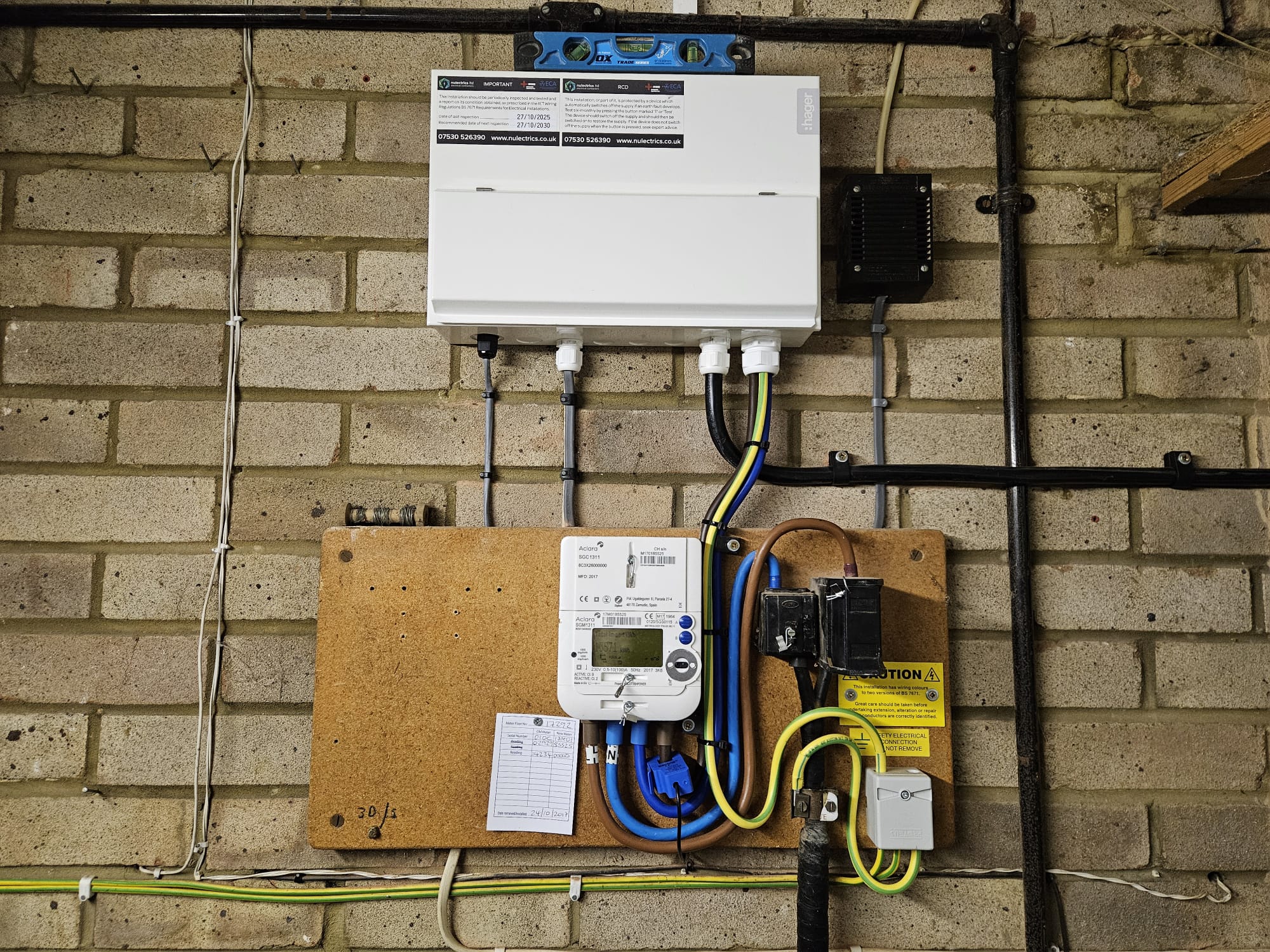
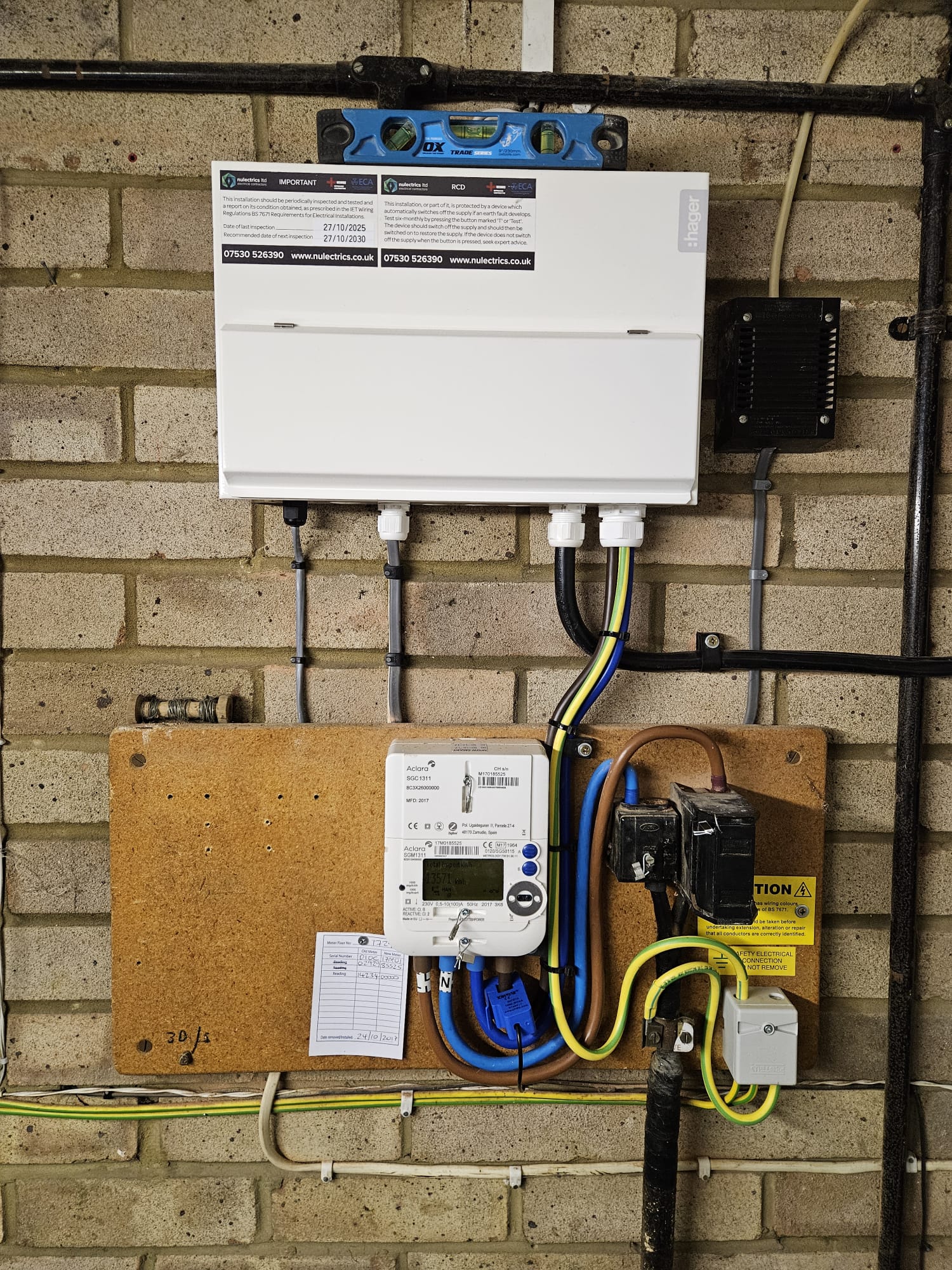
Customer chose the full replacement. We ran an EICR across the whole installation so we had baseline readings, then replaced the consumer unit with a new board that included spare ways for future additions, an SPD (surge protection device), and individual RCBO protection on every circuit including the new EV charger.
Running the 7 kW EV Charger Supply to the Garage
The main meter tails were tidied without cutting into the existing installation more than necessary. From there, the charger cable runs about 6 metres to its resting point on the outside of the garage. The customer picked brick red with a dark copper top, Simpson & Partners lets you specify colour to fit the property.
Wired Energy Manager and Load-Balanced Charging
The wired energy manager sits inside the consumer unit with a CT clamp on the incoming supply. The app is configured to a 97-98 A cutout fuse rating against a 100 A supply, giving enough headroom that the household will never blow its own fuse. The charger constantly monitors total house draw. If the house is pulling 80 A during a busy hour, the charger throttles the remaining amperage to charge slower. When the load drops, it ramps back up automatically.
The Result: A Compliant Board and Full-Speed Home Charging
The customer has a 32 A / 7 kW EV charger that always finds the fastest safe rate the household can handle. No manual scheduling unless you set your own charging times, and no blown fuses. A modern consumer unit with room for future growth, and a finish that matches the exterior instead of a generic black plastic box. The customer is extremely happy with the install and the flexibility. Most people accept a “granny charger” plugged into a 13 A socket and put up with slow charging. This works differently.
Gallery
Frequently asked questions
Do I need a new consumer unit to have an EV charger fitted?
Not always. A charger needs its own 32A way with RCD protection. If your board has rewireable fuses, no spare ways, no RCD, or the incorrect type of RCD, it needs replacing first. An EICR before installation confirms that the circuits are not going to cause nuisance tripping when the new board is installed.
How long does an EV charger and consumer unit change take together?
Usually one to two days. The consumer unit change takes most of the first day, including isolating circuits, fitting the new board with RCBO protection, and testing every circuit. The charger installation and commissioning follows. Power is off for several hours during the board change, so plan around that.
What is an RCBO and why does each circuit need one?
An RCBO combines overload protection with earth-leakage protection in a single device per circuit. The advantage over a shared RCD is isolation: a fault on one circuit trips only that circuit, rather than taking out half the house. Current BS 7671 practice is one RCBO per final circuit.
Can I claim a grant for a home EV charger?
Only if you rent, own a flat, or have no off-street parking and use an approved cross-pavement channel. Freehold homeowners in houses have not been eligible since 2022. Where a grant applies it covers 75 per cent of installation up to £500 per socket, applied as a discount on your invoice.
Why choose an untethered charger over a tethered one?
Untethered units take any cable, which suits households running more than one vehicle or expecting to change car. They also look tidier when not in use. Tethered units are quicker day to day because the cable is always attached. Both attract the same grant, so it is purely preference.