EV Charger Installation on a Looped Supply with No Driveway, Chippenham
Nulectrics installed a Simpson and Partners 7kW untethered charge point at a Chippenham house whose front door opens straight onto a public pavement. Two obstacles had to be cleared first: the property was on a looped supply shared with next door, which had to be unlooped by the network operator, and the charging position had to keep the unit inside the property’s own footprint so it did not obstruct the footway.
Products & Materials Used
- Simpson and Partners 7kW single phase untethered EV charge point, dark grey body with walnut lid
- Simpson and Partners CT clamp load curtailment, app controlled
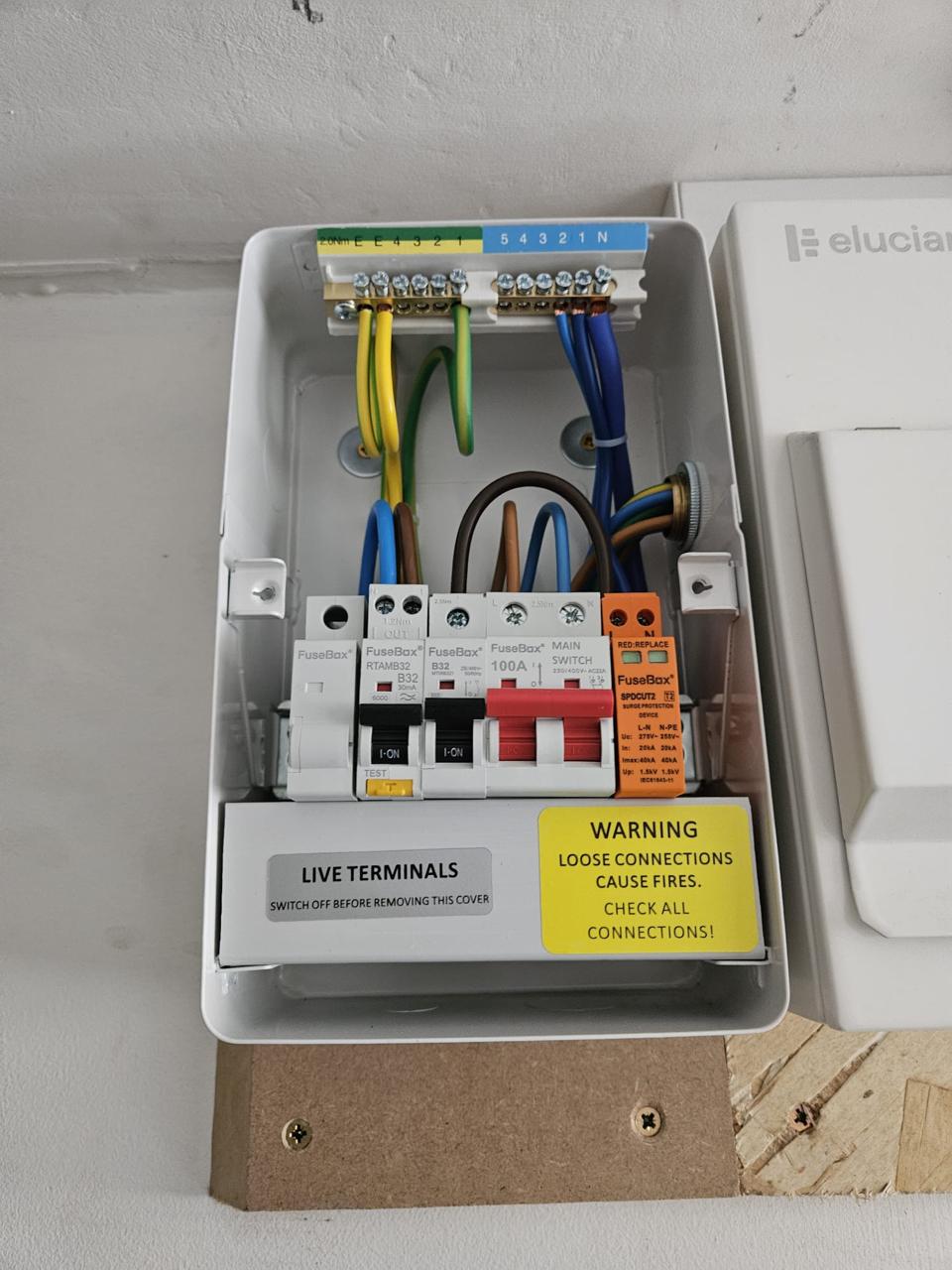
- FuseBox EV consumer unit: 100A main switch, Type A B32 RCBO, surge protection device
- Click Elucian Existing house consumer unit, previously installed by Nulectrics
The Challenge: A Shared Supply and a Front Door on the Pavement
This is the kind of property that usually gets turned down for home charging. The front door opens onto a pedestrian pavement, with the road and the parking space beyond it. There is no driveway and no rear access. Around a quarter of homes in Wiltshire have no off-street parking, and most of them are told to use the public network instead.
Two separate problems had to be solved.
The first was the incoming supply. The property was on a looped supply: the service cable comes off the network into this house, then carries on to the neighbouring property, so two homes share one service. A looped supply cannot simply have a charge point added to it. The network operator has to assess it, and in most cases the supply has to be unlooped before a charger can be installed, because the shared service was never sized for two households plus a sustained charging load.
The second was the charging position. Anything mounted on the front face of the house would project over the footway. That is not acceptable, and it is also not much use, because the cable still has to reach a car parked on the road.
The Solution: An Unloop, a Porch Position and Load Curtailment
We contacted the Distribution Network Operator and asked them to unloop the supply. They carried out their own inspection, agreed the work, scheduled it themselves and re-supplied the neighbouring property on its own service. That is not a quick process and it is worth being honest about the timescale: an unloop is measured in weeks, not days. There is no charge to the customer for the unlooping itself.
Alongside that, we checked the position with Wiltshire Council’s highways team before committing to a design, because the charging cable has to cross the footway to reach the car. Wiltshire’s position is that a bare trailing cable across a pavement is not acceptable. A cable protector is, provided it covers the full width of the footway and any verge, is non slip, has contrasting colour markings and sloped anti trip edges, and is built for outdoor pedestrian use. At the time of writing, Wiltshire does not require a licence for this. Responsibility for putting the protector out on every charge, and for anyone who trips on it, sits with the householder.
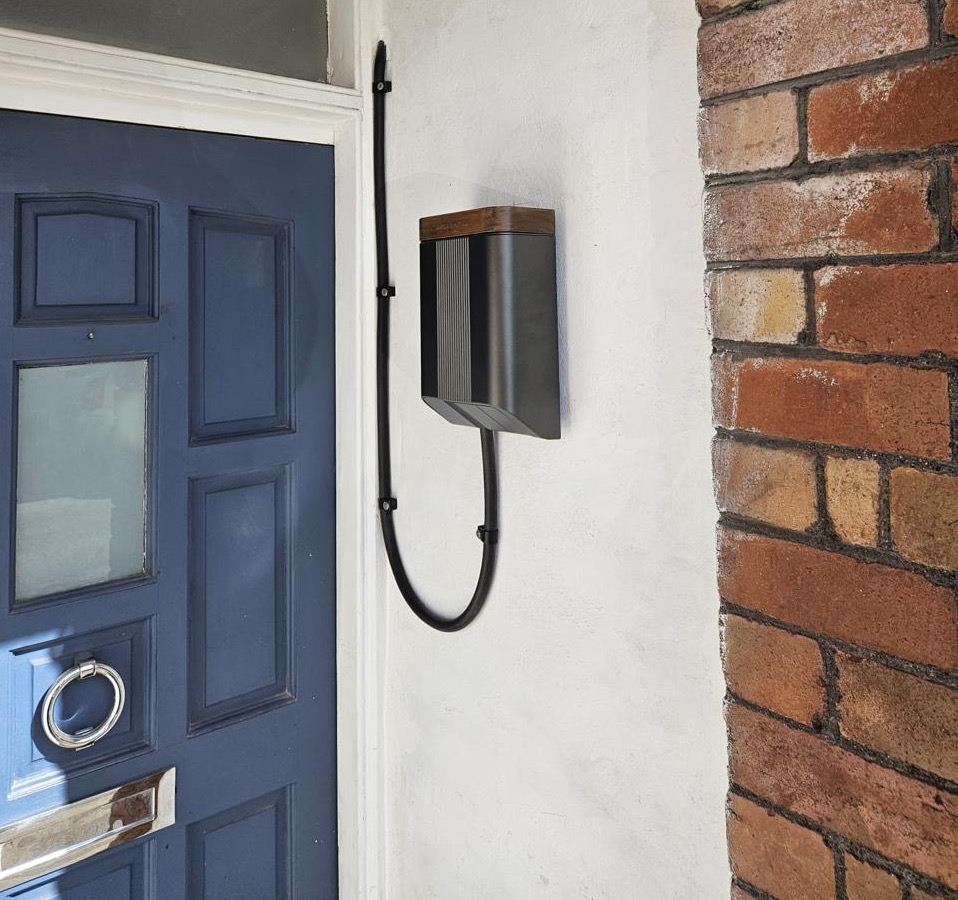
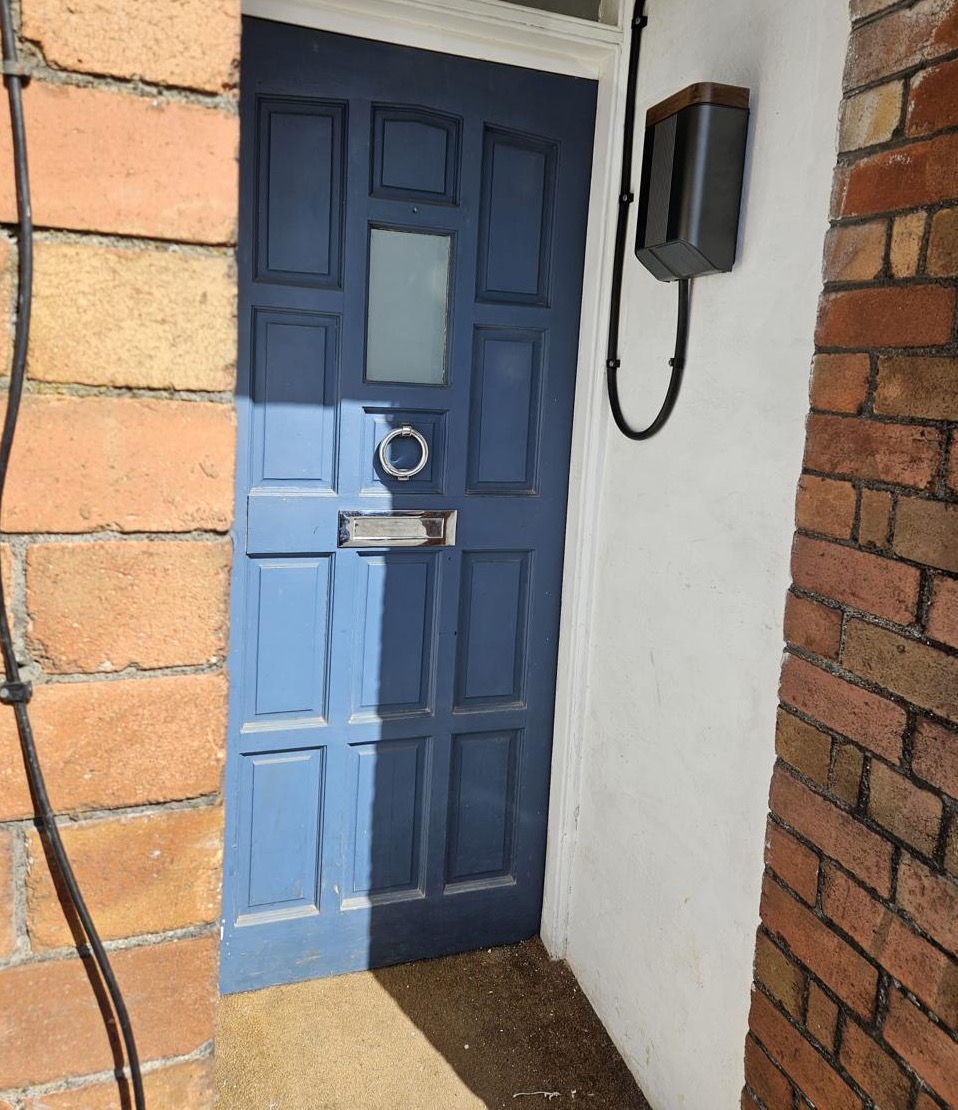
That settled the position. The charger went inside the porch reveal, just off the pavement and within the footprint of the house, rather than on the front elevation. We mounted it higher than we normally would, for two reasons: so someone with broad shoulders can walk through the door without turning sideways, and so furniture can be carried in and out without catching on it. At standard mounting height it would have been in the way.
We specified the untethered, socketed version of the charger rather than a tethered one. In a porch that people walk through several times a day, a permanently attached lead would be a nuisance and would get damaged. The socketed unit takes the customer’s own cable and looks like very little when it is not in use. It is also app controlled and can be disabled, so nobody can pull up outside and help themselves to a charge: the charger needs a deliberate action before it will deliver anything.
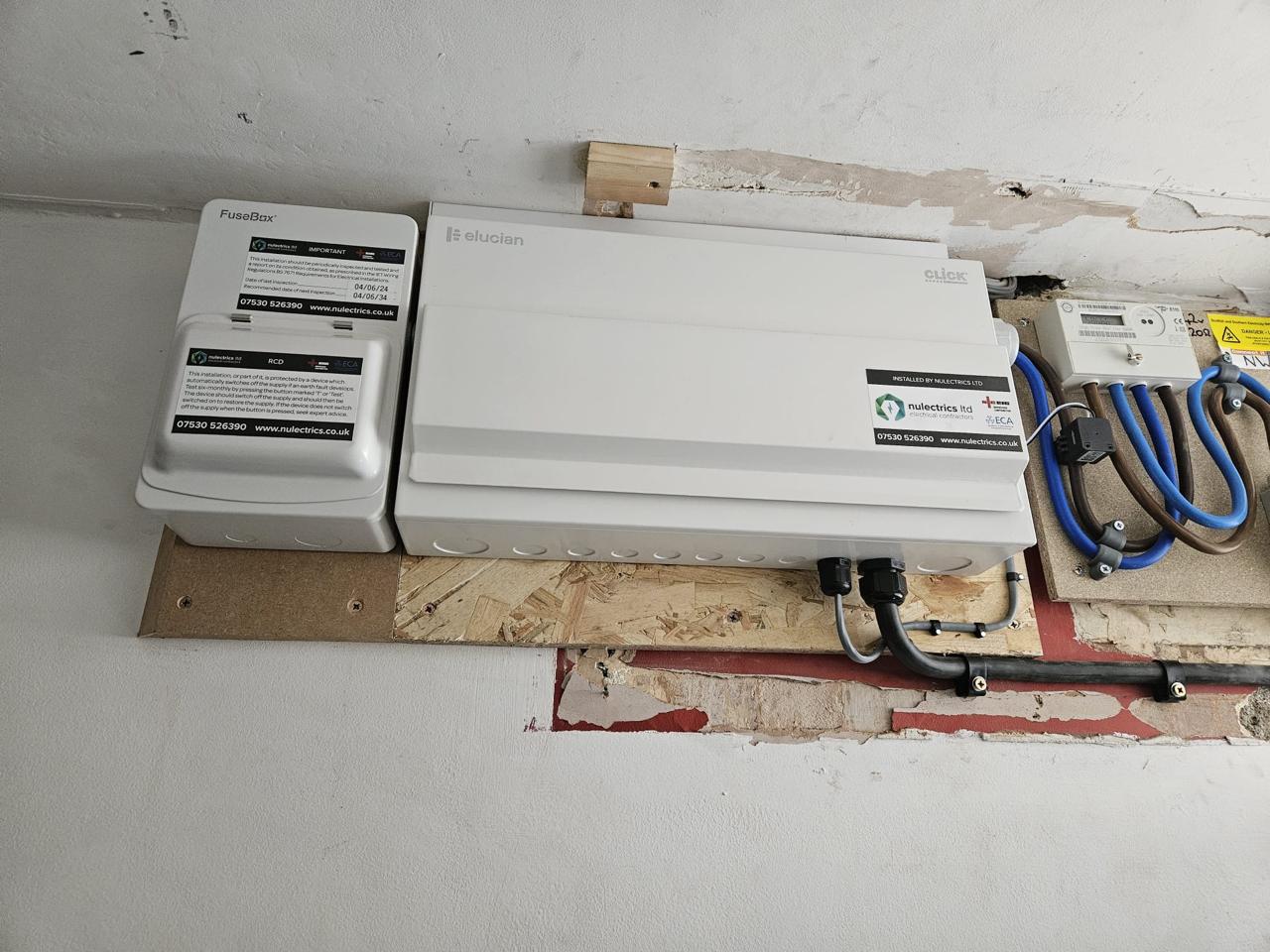
Electrically, we installed a dedicated consumer unit for the charger next to the existing house board, which we had installed previously. The EV board carries a 100A main switch, a Type A RCBO for the charger circuit and a surge protection device.
The charger runs load curtailment. CT clamps around the meter tails let it monitor what the whole property is drawing. The main cutout fuse here is 100A, so the charger is configured to hold total demand just under that, at around 97A, leaving a margin. If the house is already pulling 80A, the charger takes the remaining headroom rather than its full 32A. As household demand drops, it ramps back up to the full 7kW. The result is that the charger works around the house instead of competing with it.
The Result: Home Charging at a Property That Should Not Have It
The customer charges at home, on a property with no driveway, no rear access and a front door on a public pavement. The supply is now the property’s own rather than shared with next door, which is a benefit beyond the charger. The unit sits within the porch, out of the way of pedestrians, unobtrusive enough that most people walking past would not notice it, and disabled by default to anyone without the app.
It is worth being clear that this was not a standard installation. It needed a network operator unloop, a conversation with the highways authority, and a mounting position worked out around how the household actually moves through its own front door. Not every terraced property will get to the same answer. This one did.
See our EV charger installation service and our work across Chippenham.
Gallery
Frequently asked questions
Can I have an EV charger if I have no driveway?
Sometimes, but it depends on the property and on your local highway authority. The charge point itself has to sit within your own boundary, not overhanging the footway, and you need an acceptable way of getting the cable to the car. It is not automatic and it is not quick, but it is not always a no either.
What is a looped supply, and why does it stop an EV charger?
On a looped supply, one service cable feeds your house and then continues to a neighbour, so two properties share a single service. It does not have the capacity for two households plus sustained EV charging. The network operator has to assess it, and in most cases will unloop the supply, giving each property its own service, before a charger can be installed.
Who unloops the supply, and what does it cost?
Your Distribution Network Operator, the company that owns the local network, not your electricity supplier. Your electrician requests it on your behalf. The unlooping work itself is not charged to the householder. The realistic thing to plan around is time: it usually takes weeks.
Is it legal to run a charging cable across a pavement?
A bare cable trailed across a public footway is not acceptable and leaves you liable if somebody trips on it. Some highway authorities, including Wiltshire, will accept a proper cable protector that covers the full width of the footway, is non slip, has contrasting markings and sloped edges, and is made for outdoor pedestrian use. Policies differ between authorities and they change, so check with yours before you assume anything. Wiltshire is also looking at pavement cable channels as a longer term answer.
What is load curtailment and do I need it?
Load curtailment lets the charger monitor the whole property’s demand through CT clamps on the meter tails and reduce its own draw so the total stays below the main fuse rating. You need it where the house and a charger running together could exceed the supply. It means you do not have to choose between charging the car and using the oven.