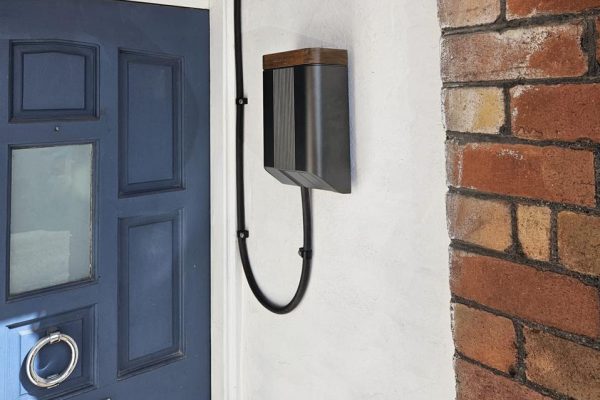
Tethered EV Charger Installation with New Garage Submain, Marlborough
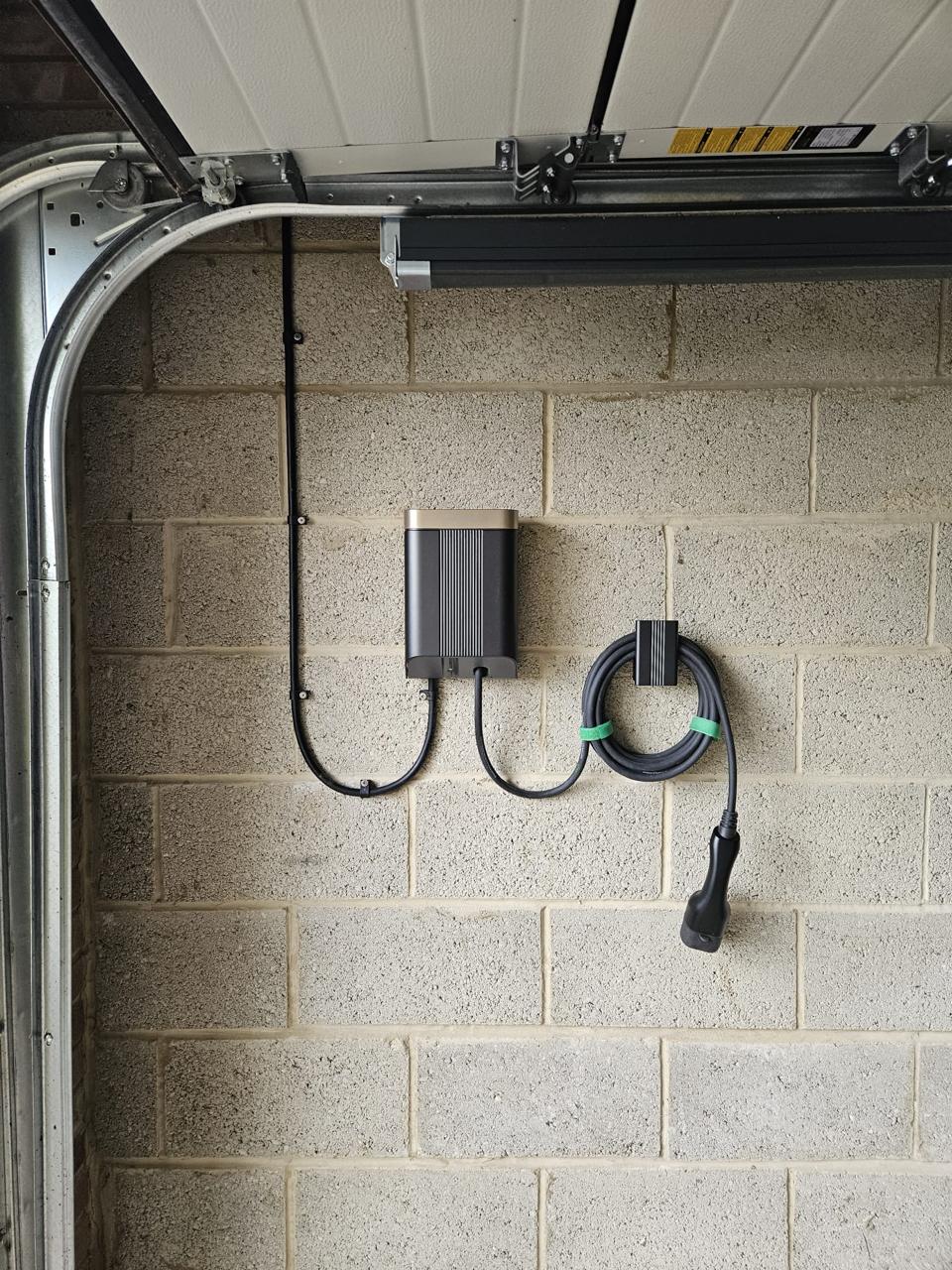
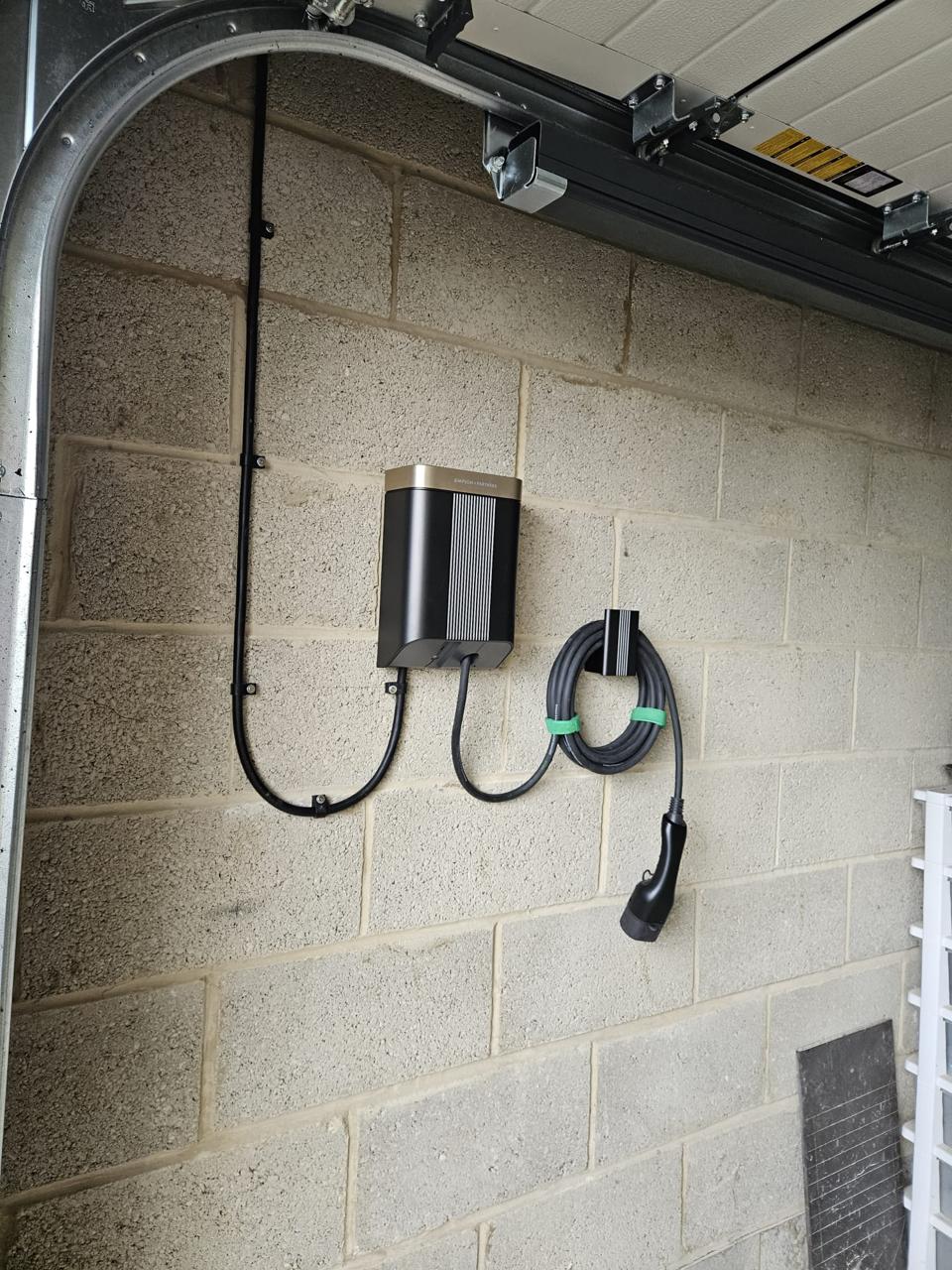
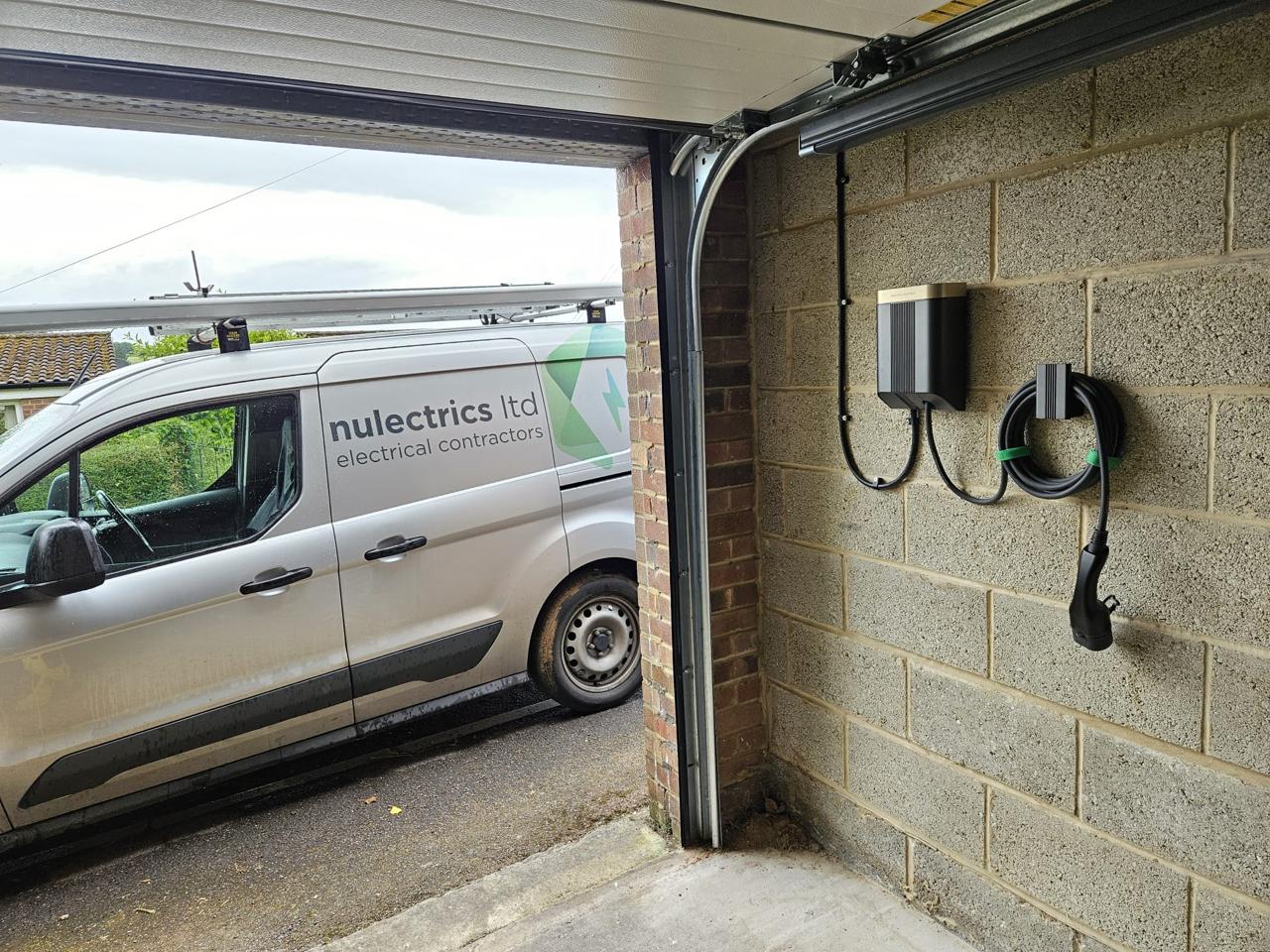
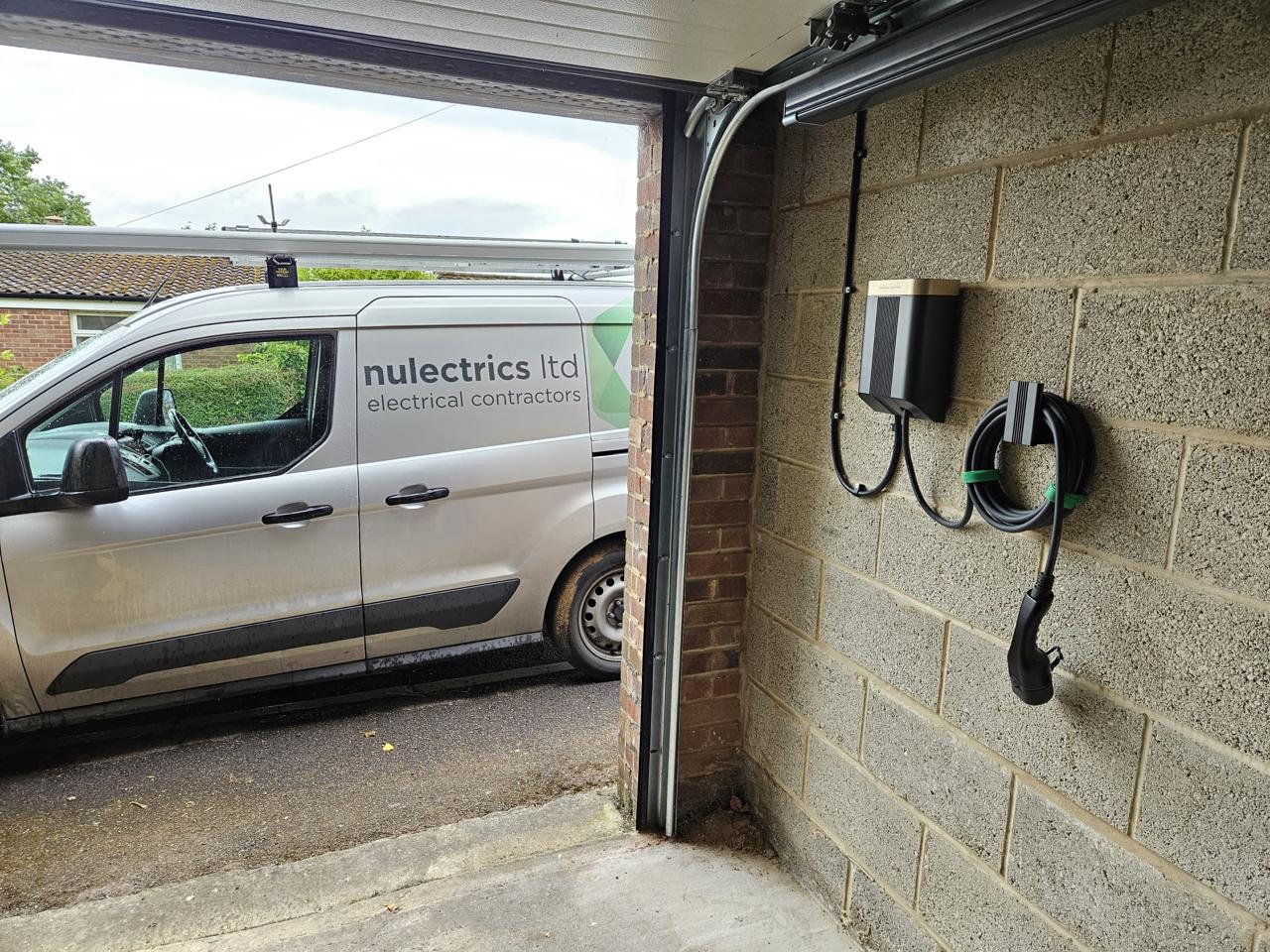
Nulectrics installed a Simpson and Partners tethered EV charger inside a domestic garage at Manton, near Marlborough. The existing submain feeding the garage was not suitable to build on, so we replaced it: a new switch fuse beside the house consumer unit, a new 16mm submain out to the garage, and a sub meter so the owner can bill charging back to his company on expenses.
Products & Materials Used
- Simpson and Partners 7kW tethered EV charge point, black body with bronze lid
- Simpson and Partners Matching cable hook
- Wylex Switch fuse for the garage submain
- Submain cable 16mm
- Sub meter kWh metering on the charge point circuit
The Challenge: A Garage Supply That Could Not Carry a Charger
The customer wanted a charge point in the garage rather than on the driveway. He charges a company car, and his employer was contributing to the cost of the installation, so he needed a way to show exactly how much electricity the car had used.
The garage already had power, fed from the house consumer unit by a submain. On inspection, that existing submain was not built to a standard we were willing to connect a new circuit to. An EV charger is a sustained, high current load, quite different from a garage lighting and socket circuit, and the supply feeding it has to be right before anything else goes ahead. Extending or reusing the existing cable was not an option, so the submain became part of the job rather than something we could work around.
The second requirement was the billing. A standard charger records energy in its own app, but for expense claims the owner wanted metered figures from a fixed meter on the circuit rather than a reading from a phone.
The Solution: New Switch Fuse, 16mm Submain and a Sub Meter
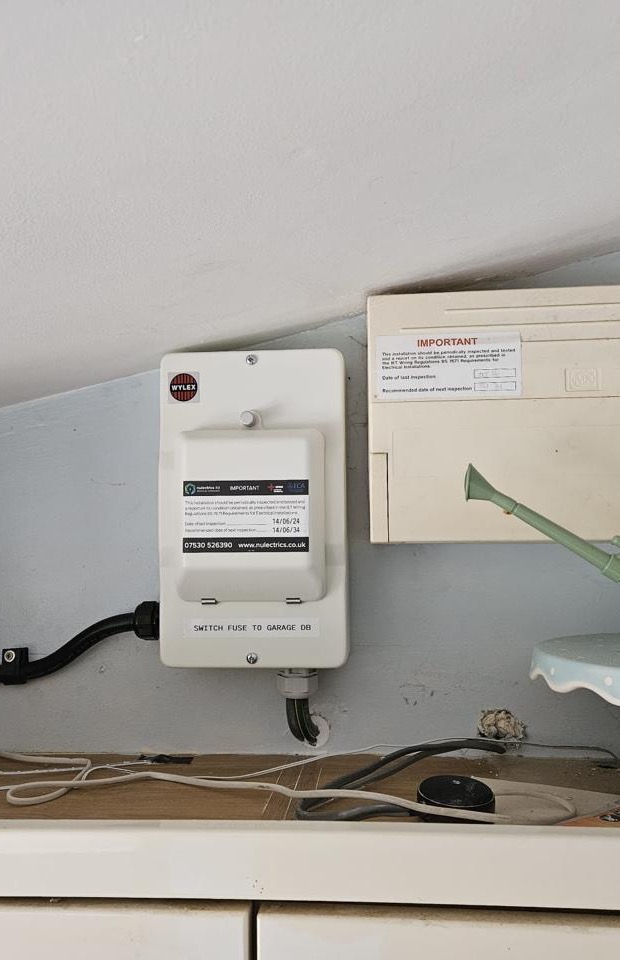
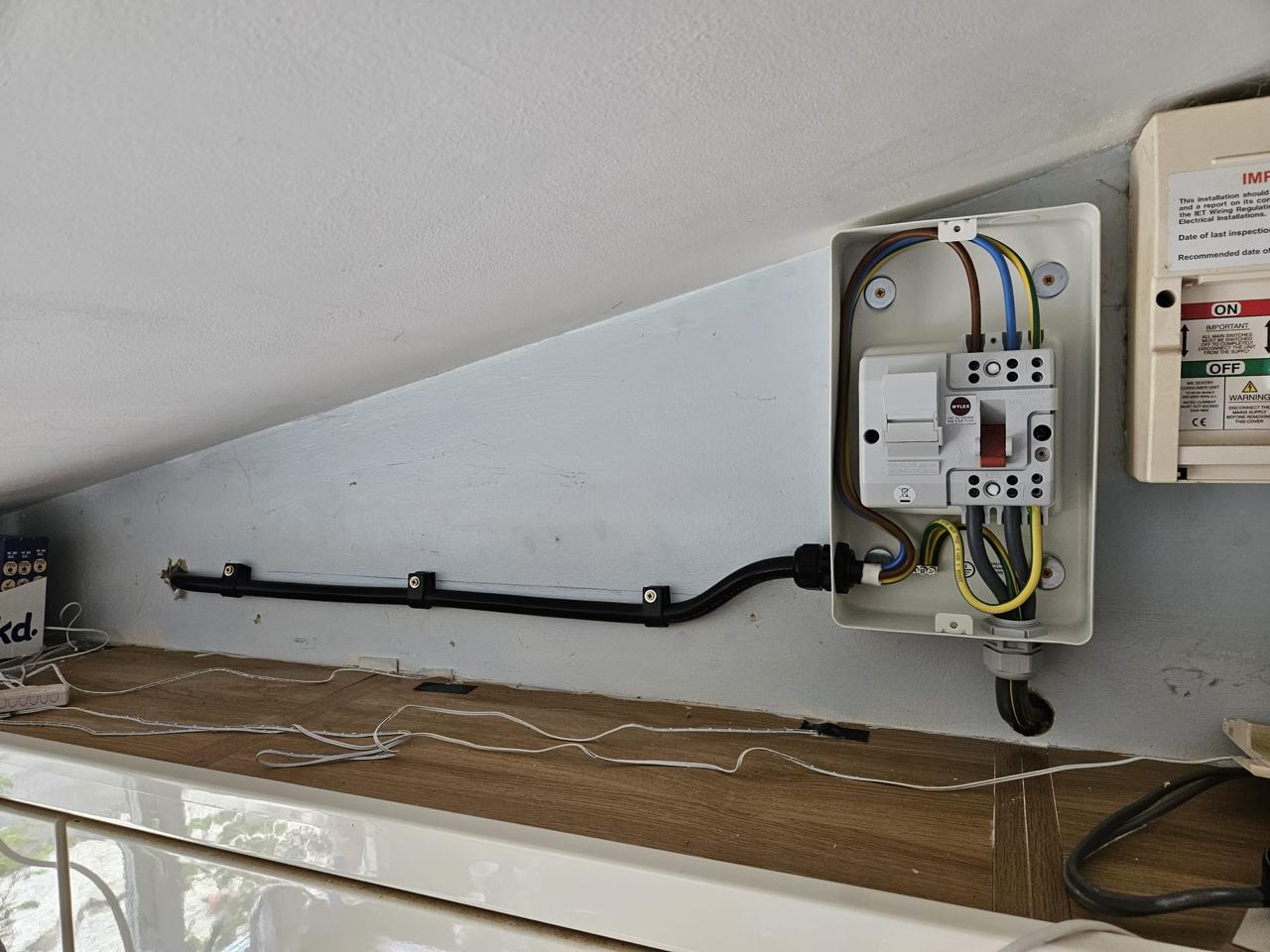
We started at the house end. A new switch fuse went in alongside the existing consumer unit, giving the garage supply its own point of isolation and protection, clearly labelled so anyone working on the installation later can see what it feeds.
From there we ran a new 16mm submain out to the garage and into the garage consumer unit. Sixteen millimetre cable is generous for a single 7kW charge point, and that is deliberate: it keeps voltage drop low over the run and leaves the garage supply with capacity for whatever else gets added later, rather than being sized to only just cope.
Inside the garage consumer unit we fitted a sub meter on the charger circuit. It logs the charge point’s consumption in kilowatt hours, independently of the car and the app, so the owner has a fixed reading to put on an expense claim.
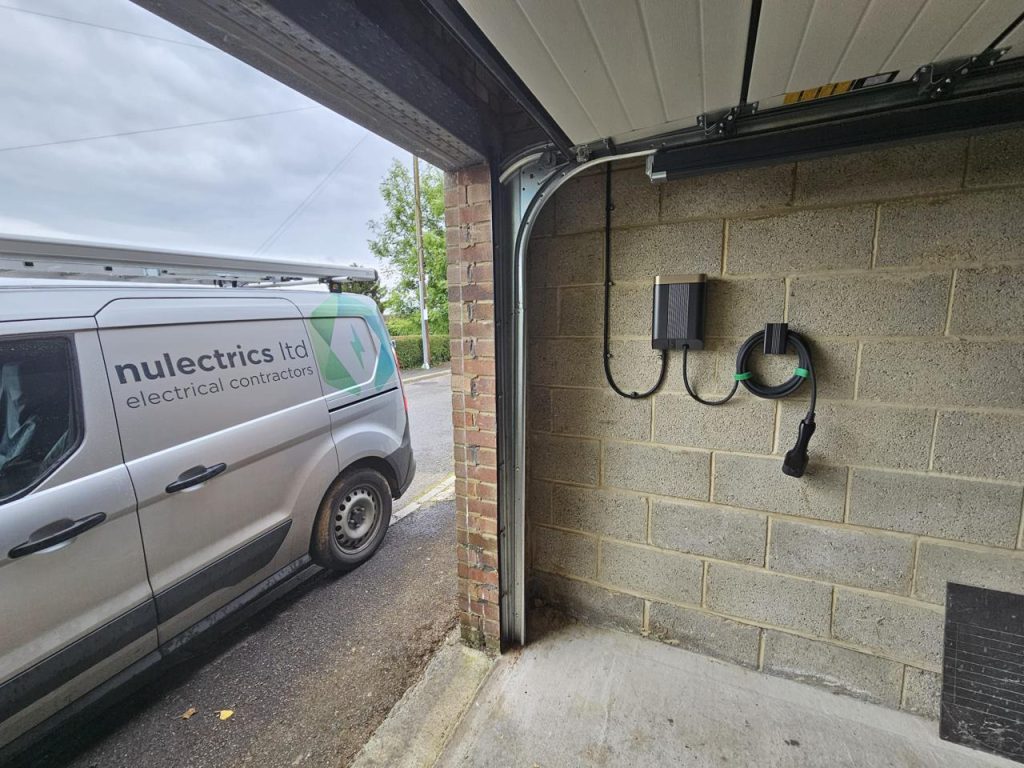
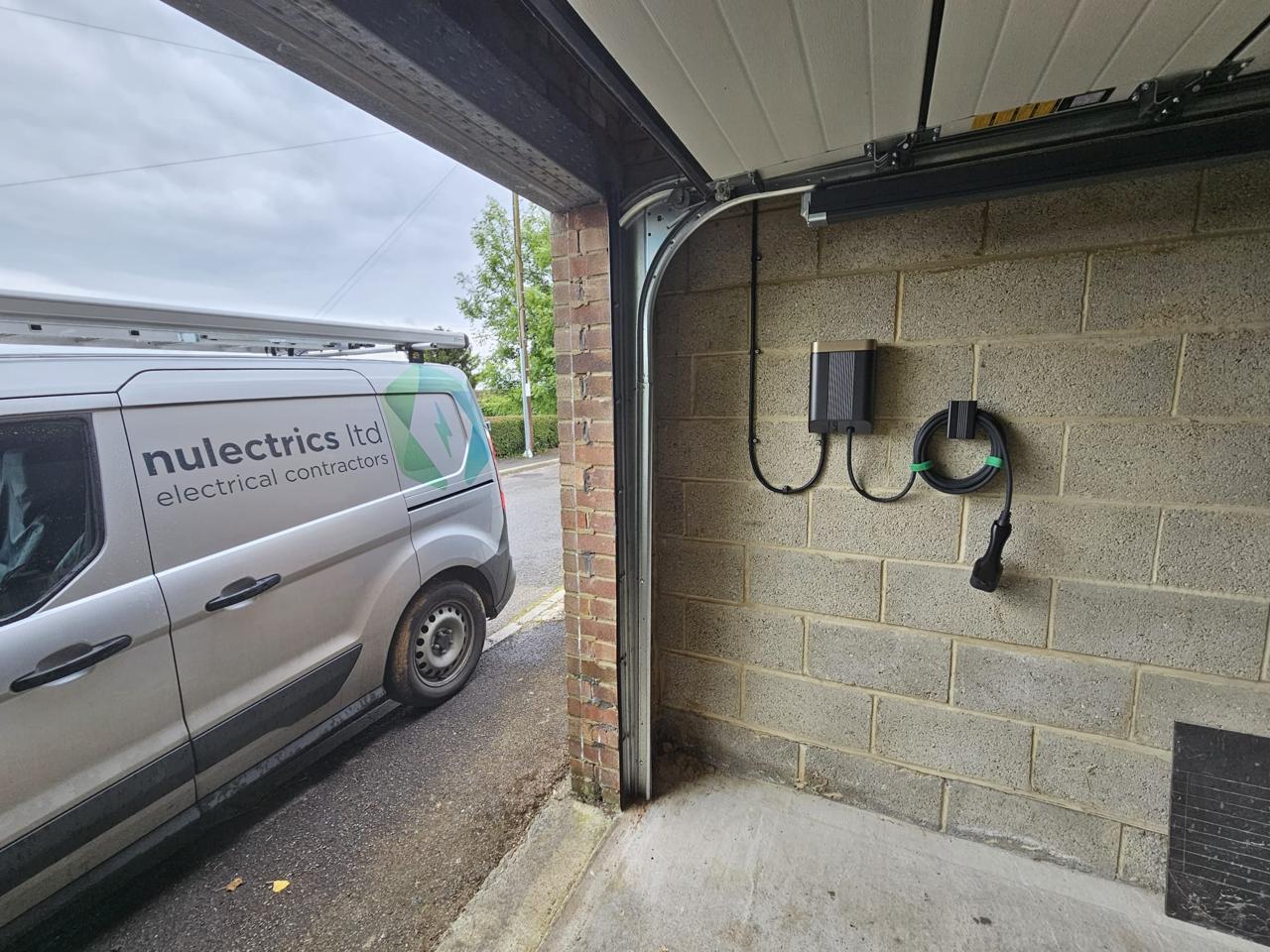
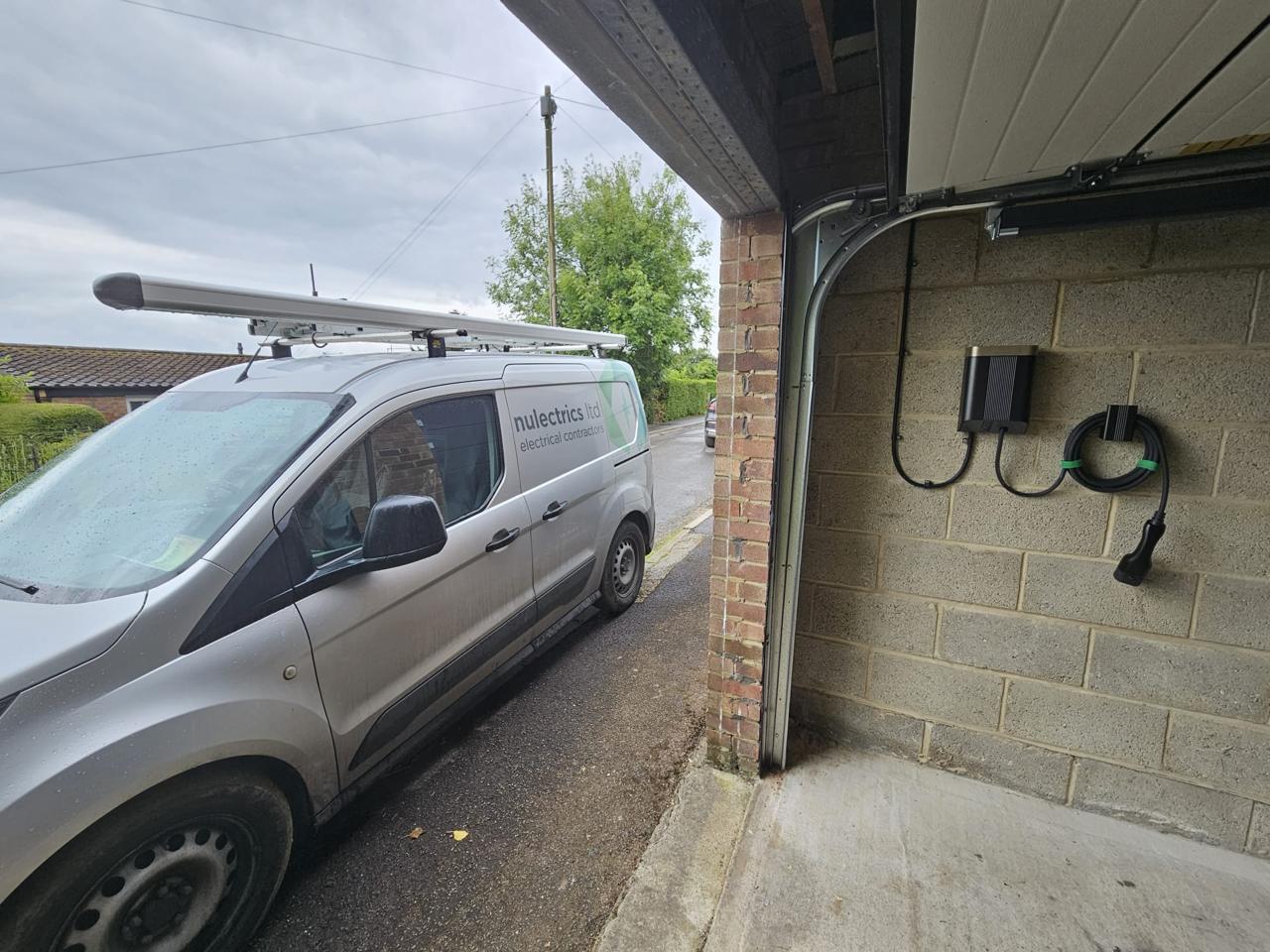
The charge point itself is a Simpson and Partners unit, black body with a bronze lid, in the tethered version. Tethered means the charging lead is permanently attached, so there is no separate cable to fetch, uncoil and store. We fitted the matching cable hook next to it, which is what the lead coils onto when it is not in use.
Position was chosen around how the customer actually uses the garage. The charger sits on the blockwork just inside the up and over door, at the front. He pulls up on the drive outside, lifts the door, plugs in, and closes the door again. The charger, the lead and the hook all sit inside the garage footprint.
The Result: A Charge Point That Puts Itself Away
The finished installation is completely out of sight when the garage door is down. There is no unit on the front of the house, no lead coiled on an external wall, and nothing on the driveway to walk around. For a property where the garage faces the road, that matters more than it sounds.
The supply behind it is now the right one for the job. The garage runs on a new submain from a dedicated switch fuse rather than on cable that was never intended to carry a charging load, and the sub meter gives the owner the figures he needs each month without having to screenshot an app.
See our EV charger installation service, or read about the EV charger grants available in 2026.
Gallery
Frequently asked questions
Can an EV charger be installed inside a garage?
Yes, and it is often the tidiest option. The charge point, the lead and the cable hook all sit inside the building, so nothing is mounted on the front of the house and nothing is left out in the weather. The main consideration is where you park: you need to be able to reach the car from the charger with the door open.
What is a submain?
A submain is the cable that carries power from a property’s main consumer unit to a separate building or a second consumer unit, in this case from the house to the garage. It is the supply that everything in the outbuilding runs from, so if you are adding a significant load like a charge point, the submain has to be able to carry it.
Why does an existing garage supply sometimes need replacing before a charger goes in?
A garage supply that was sized for a light and a couple of sockets is a different thing from one that has to carry a charge point drawing 32 amps for hours at a time. If the existing cable or its protection is not suitable, the honest answer is to replace it rather than connect a new circuit to something that will not support it.
Can I bill EV charging back to my employer?
Many people do, particularly where the car is a company vehicle. What makes it straightforward is having a metered figure for the charge point alone. A sub meter on the charger circuit records kilowatt hours independently of the vehicle and the charger app, which gives you a single number to claim against. How your employer treats that claim is between you and them.
Tethered or untethered: which is better?
Tethered means the lead is attached to the charger, so you unhook it and plug straight in. Untethered means you use your own cable and store it in the car. Tethered suits a garage or a covered space where the lead can live on a hook. Untethered tends to suit exposed positions, where a permanently attached lead is more likely to be in the way or to get damaged.