Electric Shower Replacement in Cherhill
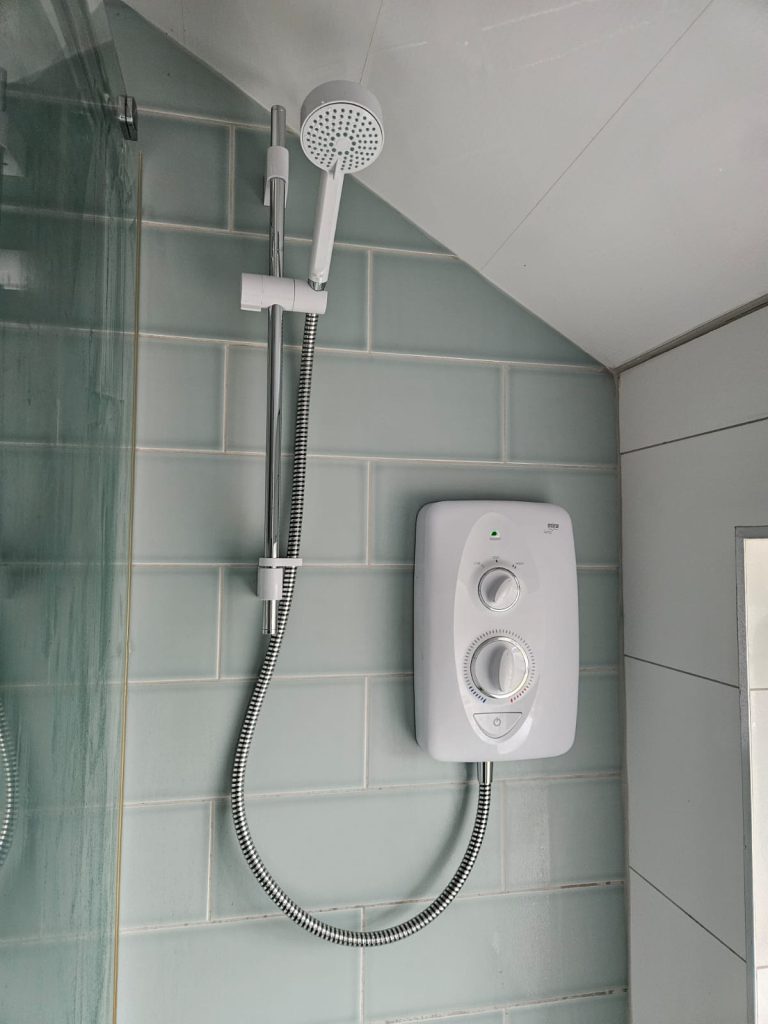
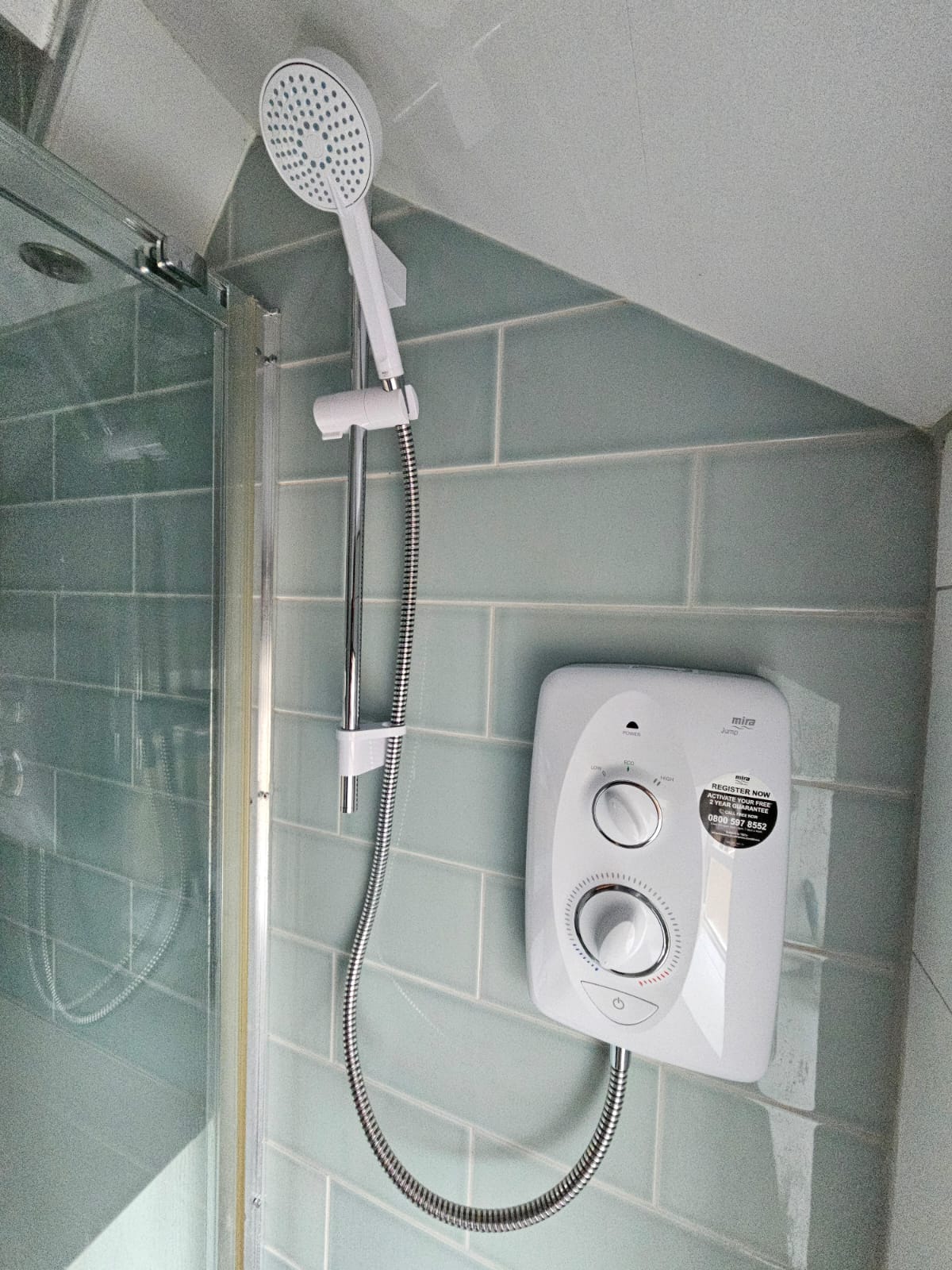
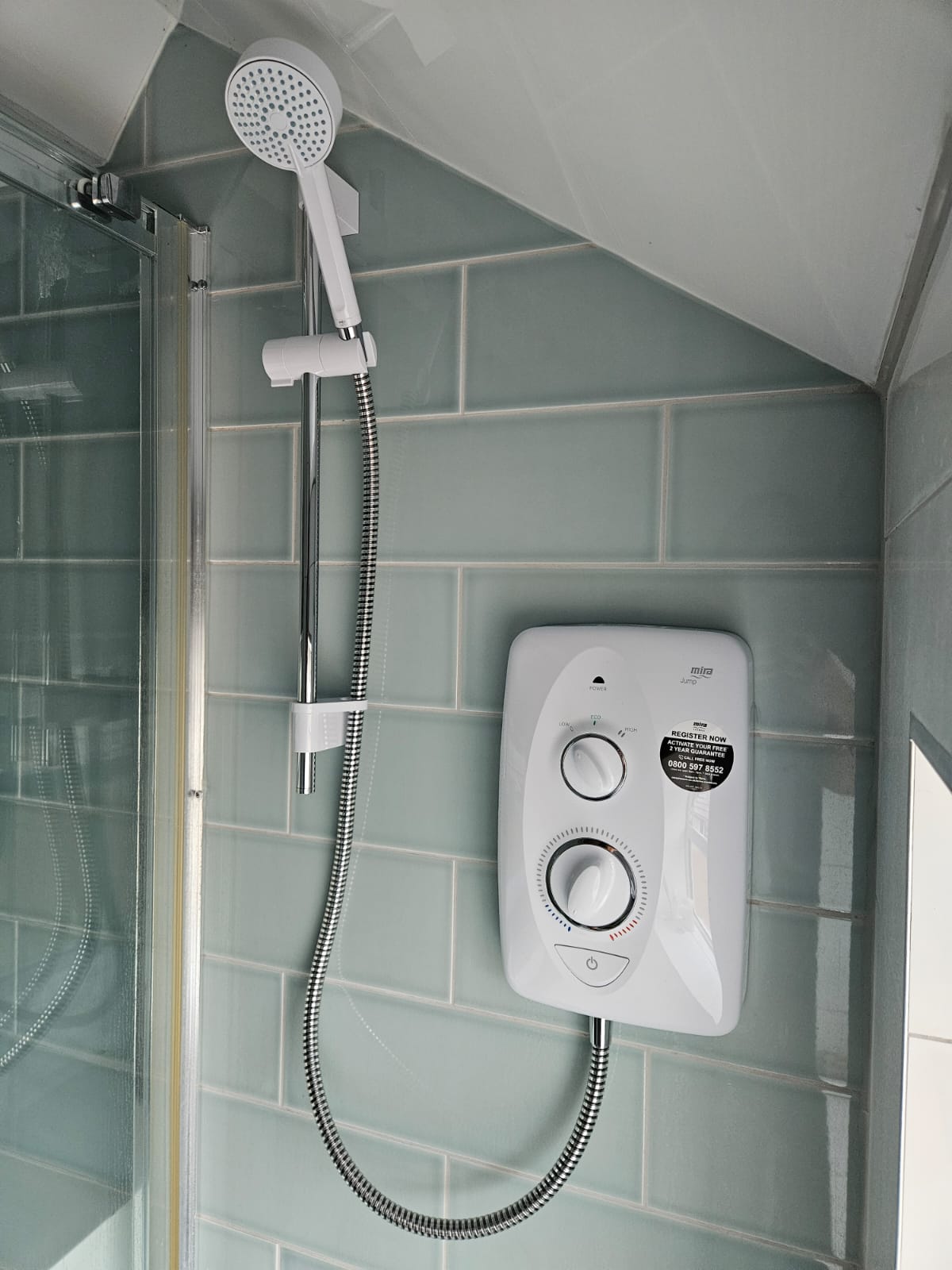
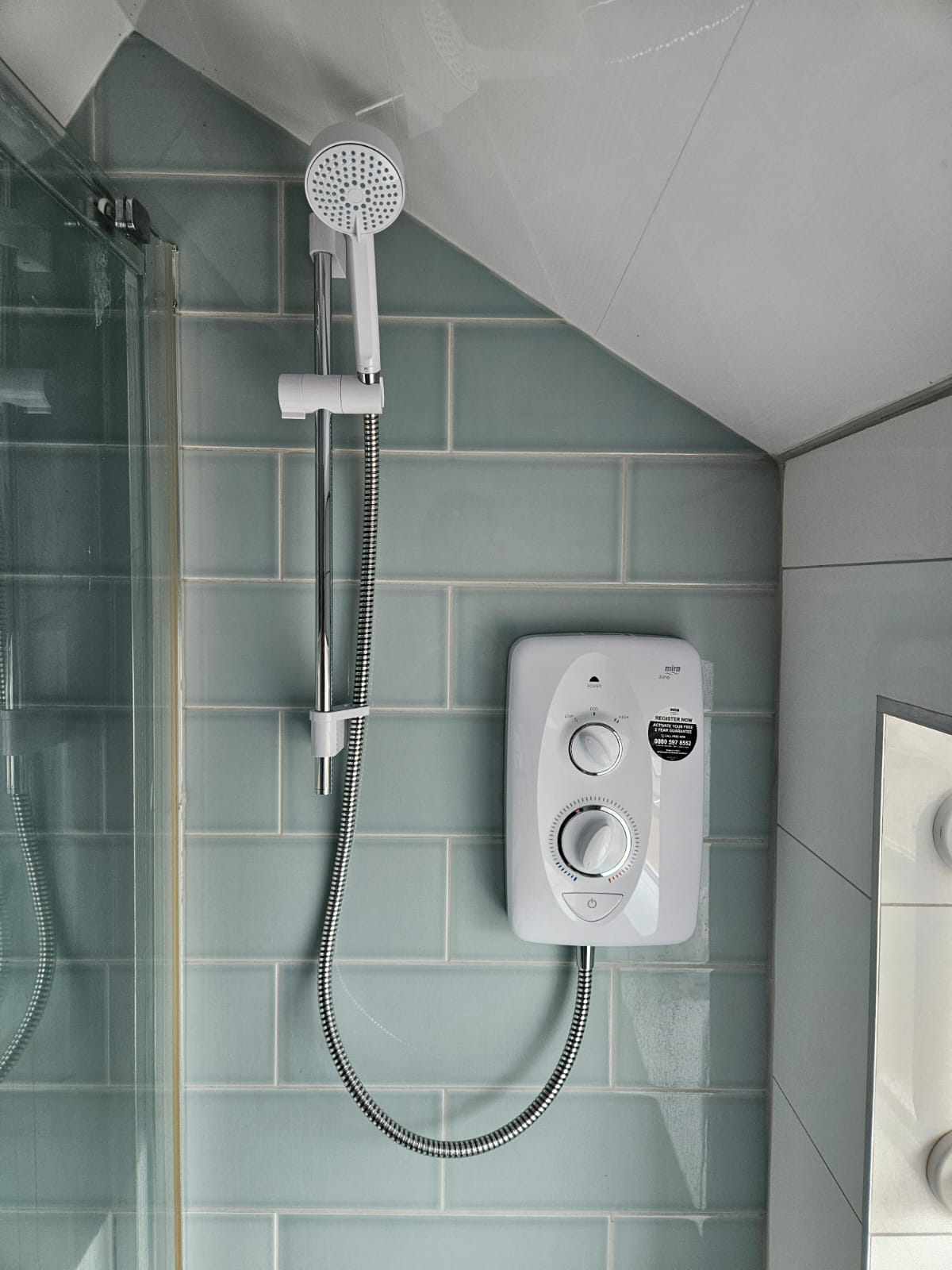
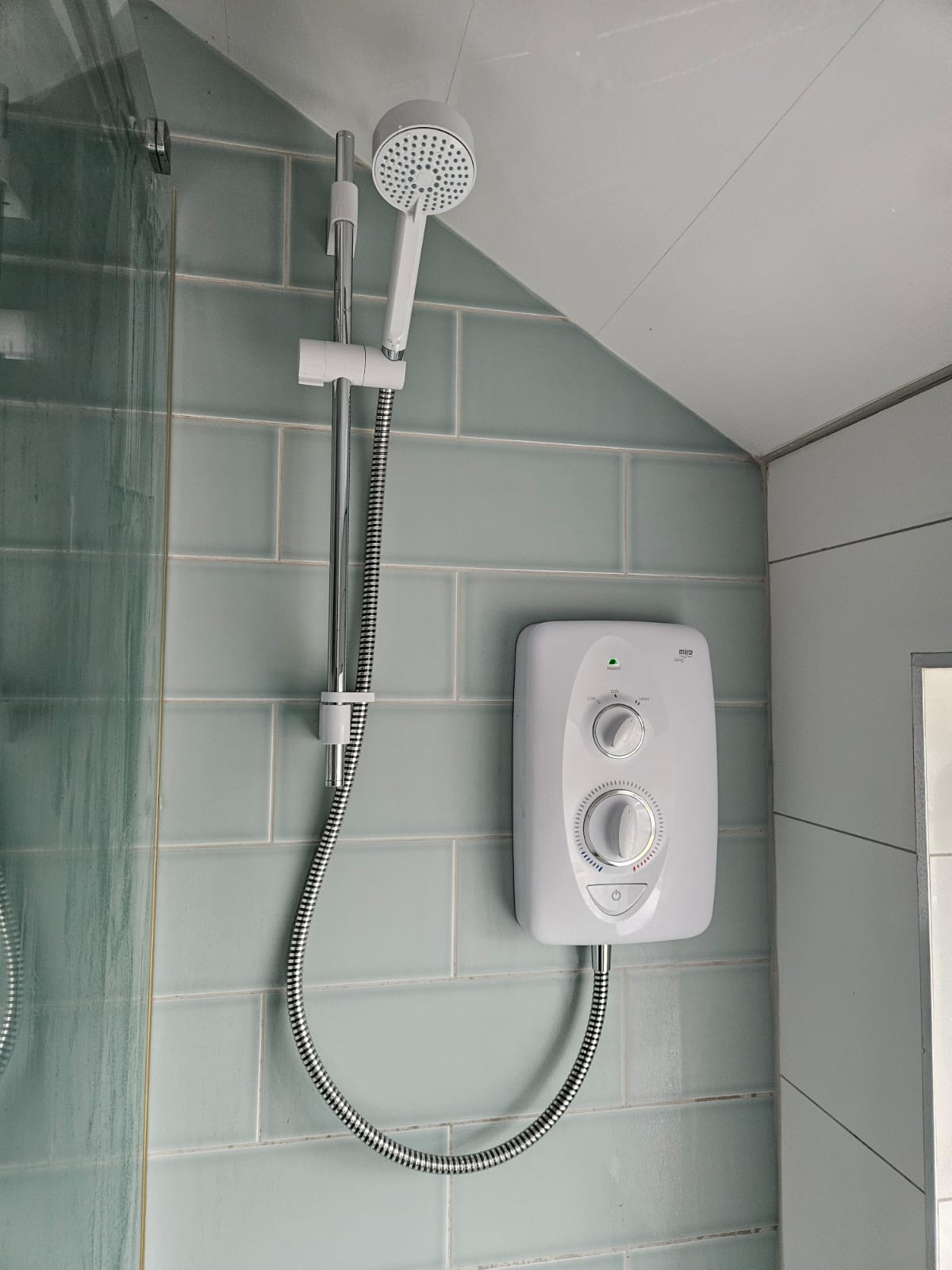
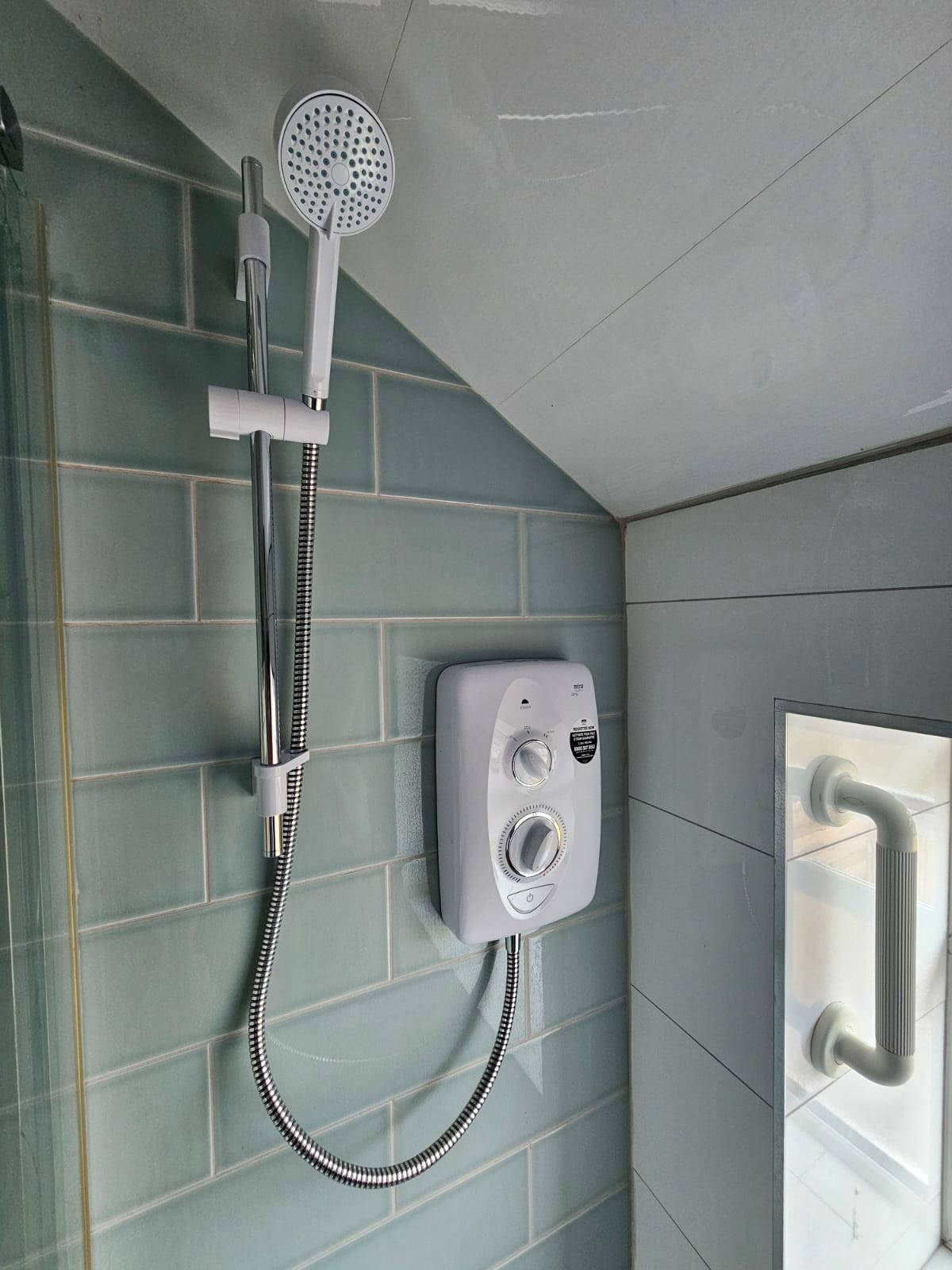
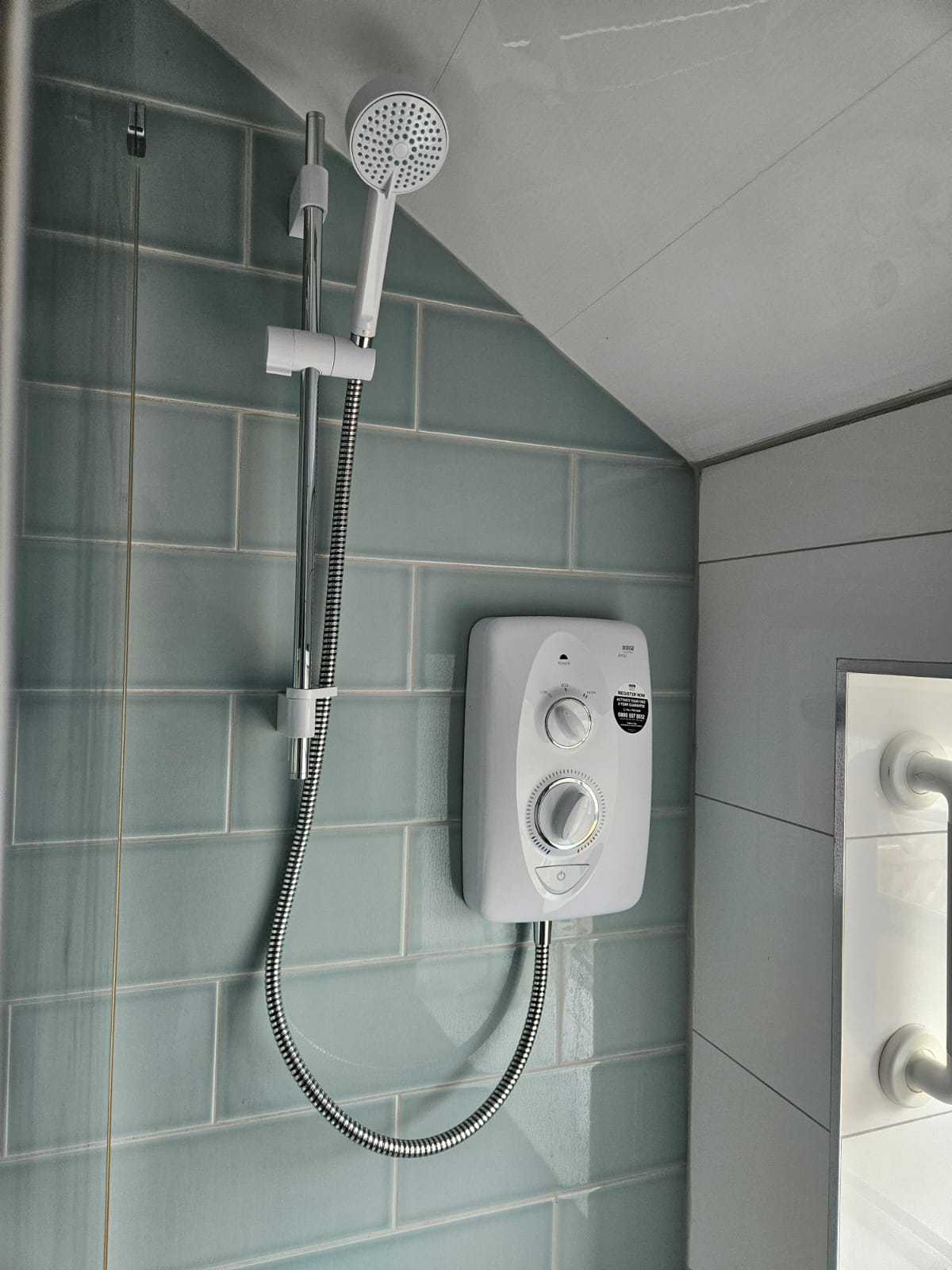
Nulectrics replaced a 9.5 kW electric shower at a domestic property in Cherhill, just outside Calne. The customer had used us before for electrical work. This time the old shower had failed and needed swapping for a new Mira Jump. We took the opportunity to upgrade the plastic pipework beneath it to copper compression fittings so the next engineer to touch it can maintain it properly.
Products & Materials Used
- Mira Jump 9.5 kW electric shower
- Copper 15 mm pipe and compression elbows with O-ring seals
The Challenge: A Plastic Elbow Feeding a Failing Electric Shower
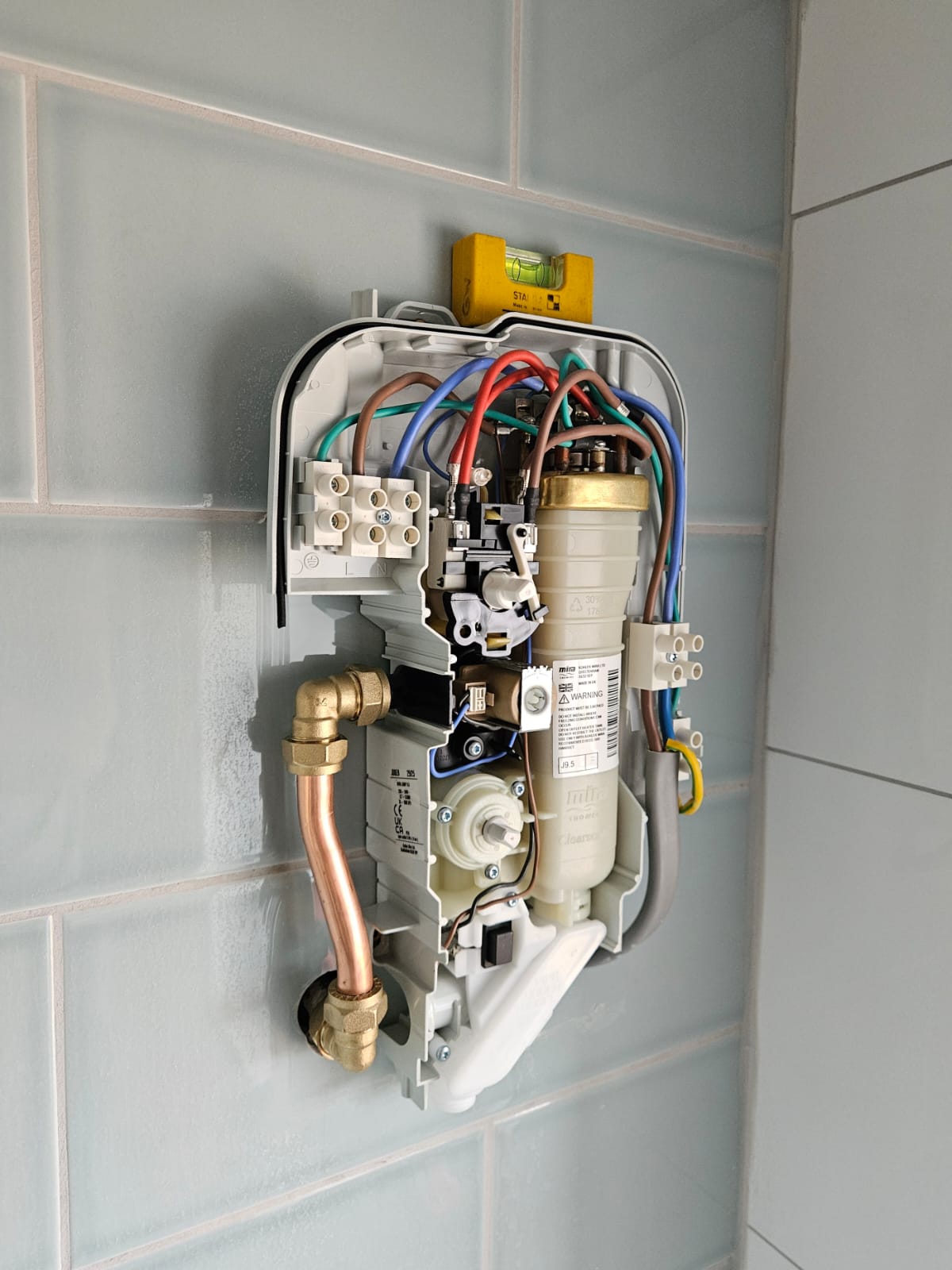
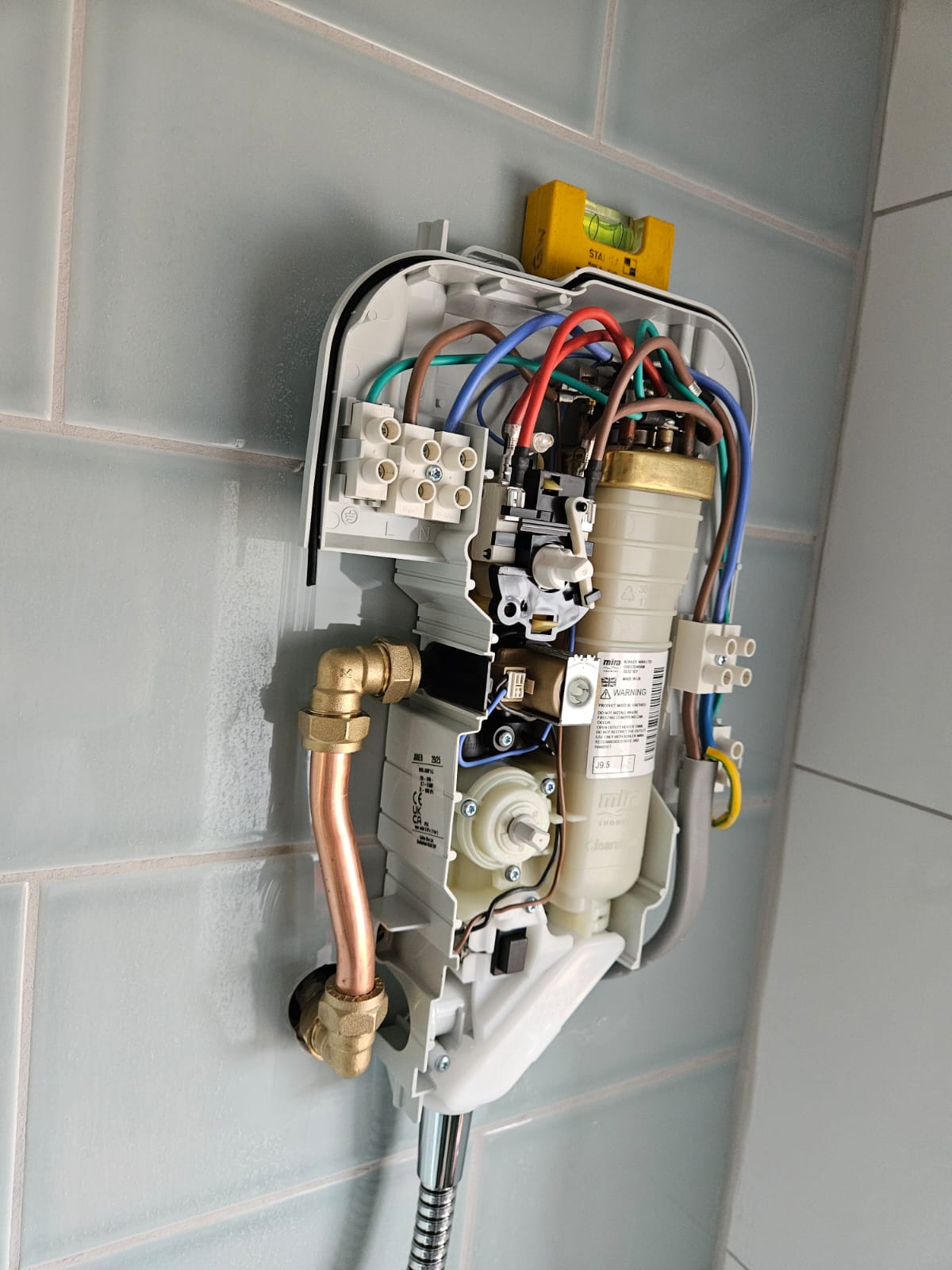
The customer had a plastic 50 mm elbow feeding the old shower unit, sitting inside the wall void. It looked hideous behind the cover. The collar of the plastic fitting faced into the void, so if the next engineer wanted to swap the unit, they would have no way to grip it without cutting the pipe. That is the kind of shortcut that costs the next person a lot of time.
The Solution: Copper Compression Fittings and a 9.5 kW Replacement
Removing the Old Shower and Plastic Elbow
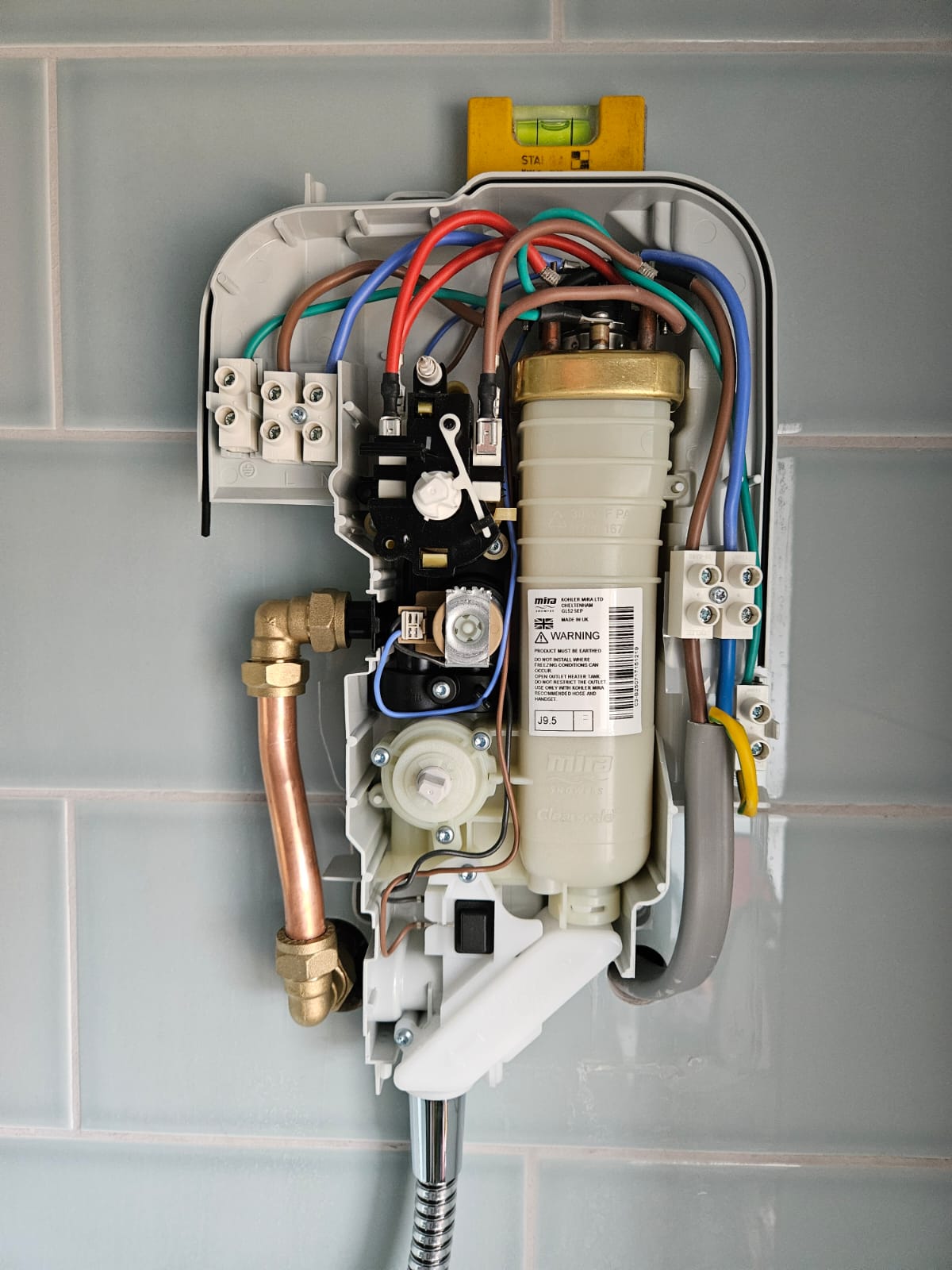
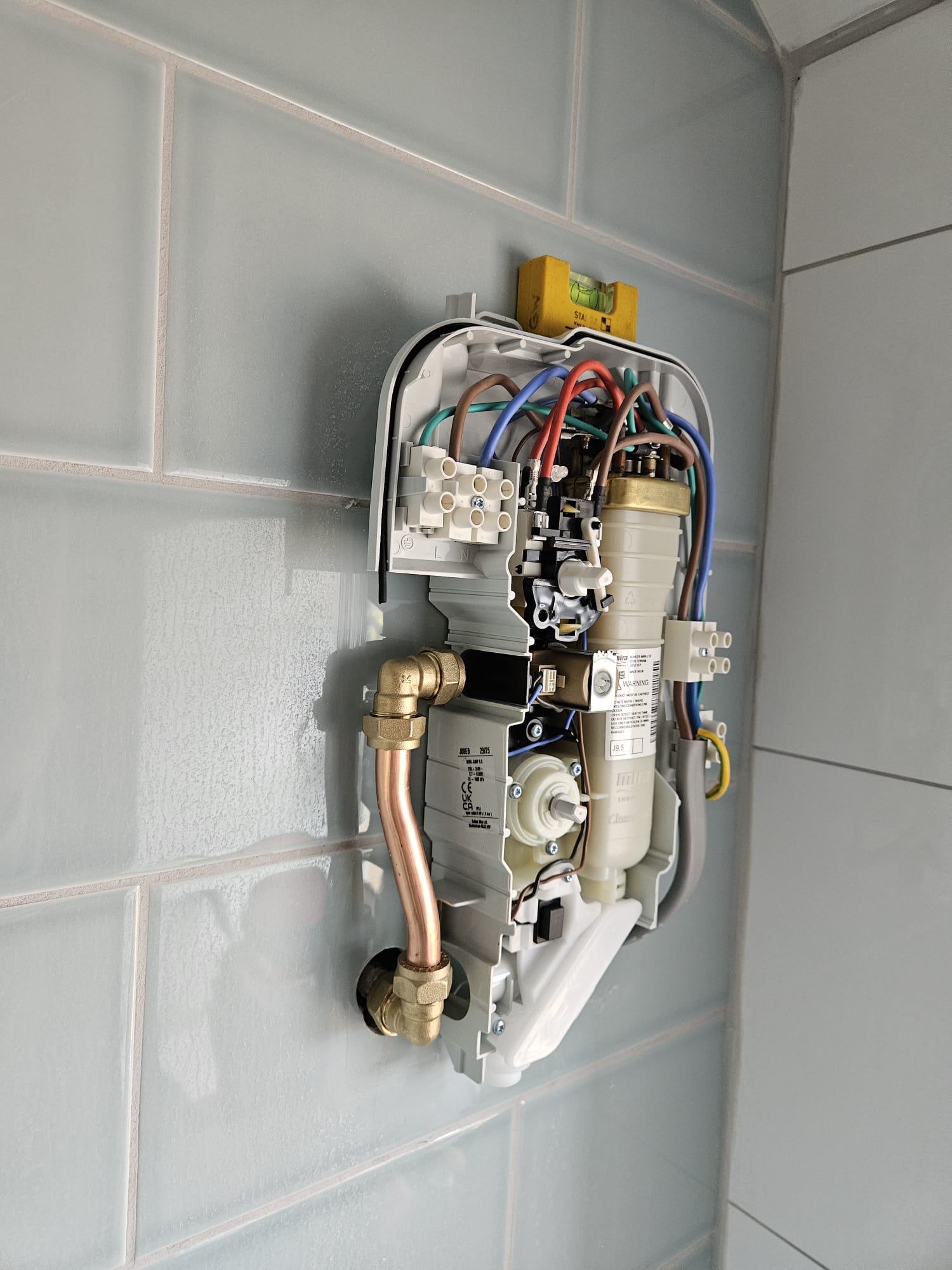
Georgio isolated the water and the local electric switch, then removed the old shower unit. Getting the plastic elbow off the pipe took some care because the collar was facing into the void, so we had to work through the shower opening to release it. Once the old fittings were out, we replaced the plastic pipe run with 15 mm copper, using compression elbows top and bottom.
Fitting the New Copper Pipework and Mira Jump
The bend was formed on a pipe bender to give the copper a clean set as it comes out of the wall. Compression elbows use an O-ring that squashes against the fitting when you tighten the nut, enough to make a seal, not so much that you buckle the elbow or shear the thread. Once tight, the new Mira Jump unit went on the wall and was connected.
The Result: Full-Power Showering with Serviceable Pipework
The customer has a full-power 9.5 kW Mira Jump shower with pipework that is set up to be maintained. The next engineer can undo a compression nut, take the O-ring off, and swap the unit without cutting pipe. It also looks properly finished behind the cover, with copper and brass fittings instead of plastic hidden away where the last installer thought no one would look.
See our domestic electrical services, our EICR testing, or read our guide to EICR costs in Wiltshire.
Gallery
Frequently asked questions
Can I replace an electric shower with a more powerful one?
Only if the circuit supports it. A higher-rated shower draws more current, so the cable size, breaker rating, and consumer unit capacity all need checking first. Fitting a 9.5kW unit onto a circuit designed for 7.5kW is a genuine fire risk, not a technicality.
How long does an electric shower replacement take?
A straight swap on an existing suitable circuit takes a few hours. Where pipework or the supply needs upgrading, allow a full day. This project needed the old plastic elbow replacing with copper compression fittings, which added time but made the installation serviceable in future.
Why replace plastic pipe fittings with copper?
Plastic push-fit fittings behind a shower are difficult to inspect and awkward to work on later. Copper compression fittings can be isolated, tightened, and remade without cutting into the wall. On a component that will need servicing during its life, that accessibility is worth the extra cost.
Does an electric shower need its own circuit?
Yes. An electric shower must have a dedicated radial circuit from the consumer unit, correctly sized for the shower rating, with RCD protection and a means of isolation. It cannot share a circuit with sockets or lighting. This is a common failure point found during EICRs on older installations.
Do I need an electrician to change a shower?
Yes. Electric shower installation is notifiable work under Part P of the Building Regulations, and it involves a high-current circuit in a bathroom, which is a special location under BS 7671. It must be installed and certified by a competent person registered with a scheme such as NICEIC.